Showing posts with label internet. Show all posts

Saturday, October 08, 2011

The real „FarmVille“

One British farm has done  quite an unusual move: it decided to be owned by 10.000 internet users, who will, just like in a popular on-line game on Facebook, FarmVille, make all the important decisions. 


From May 2011, a large farm near Cambridgeshire in England is in ownership of internet users across the globe, who will vote for every decision, even the smallest one, regarding cows, pigs, sheep and mowing – just like in a mega-popular on-line game on Facebook – FarmVille.

The experiment called "MyFarm" is located on 2,500 acres of Wimpole Estate near Cambridgeshire. Up to 10.000 internet farmers will jointly make decisions which bulls to buy, crop to plant and how often the soil will be irrigated. All they have to do is to pay a one-time fee of £30, and that fee includes even the option to come and visit the farm for themselves. 

I will put in here whatever the online farmers want to grow”, says Richard Morris, Wimpole's manager.Farming is always a compromise. There is never a right or a wrong answer. If I choose one thing, my neighbor will be leaning over the fence shaking his head. The online farmers will not be able to choose to grow cannabis or bananas, but undoubtedly there will be some strange decisions, some decisions I would not have made.”

Fiona Reynolds, Director-General of The National Trust, who owns the Wimpole Estate, believes that this whole idea will also have an educational significance. “This is all about reconnecting people to where their food comes from. Our TNS poll showed that only 8% of mothers feel confident talking to their children about where their food comes from. That's really poignant.

Project’s manager, John Alexander, agrees that FarmVille, a virtual game that, with each month, at least for a few hours, entertains almost 50 million players, was a big inspiration for this venture. “But this is a real farm”, says Alexander, who came up with this idea while working for an advertising agency.

On-line farmers will manage the estate through discussions that will always end with a voting. The winning option will be the one with the most votes. One of the first decisions was, what to grow in the Pond Field. This field covers 21 hectares. Participants, or “bosses”, will receive all necessary information through blogs and video clips. That will be of great importance before any decision because, all major decisions, and even the not-so-important ones, will be delegated to the users of “MyFarm”. In this way, the on-line farmers will not only decide whether to grow a fruit or wheat somewhere, but also and  what kind of wheat. 


I am making decisions every day”, Richard Morris said. "The first thing I do after getting up is look at the weather out of the window, and that sets the day going”.

Currently, on the Wimpole Estate, there are about 300 lambs. The unusually dry weather for Britain this year has left many fields without enough grass. Because of that, the heard is mostly spending time in the barn. 

Morris also has an idea to develop an application for smartphones, which will allow him to receive instant advices from on-line farmers at any time of day and night.  “For example, if I have wheat in the field, ripe and ready, but rain in the morning means it is damp, do we risk waiting and losing some of the crop, or combining [harvesting] it now and incurring some extra drying costs?”.

Of course, not everyone accepted this idea with equal enthusiasm. And among them are not just farmers. Nicholas Lovell, one of the most famous journalists who write about computer games, says he is not convinced in success of this idea. “There is something in the idea that people like to grow, nurture and beautify things. But Farmville's success is down to the craftsmanship of hooking into basic human psychology: the need to finish things we've started, to return gifts when we're given them and many, many more. A Farmville for which people had to pay £30 to access would have flopped miserably.


The thing that can comfort Richard Morris is the fact that the Wimpole Estate is located in a rural area, where the signal for mobile phones is rather bad. "I know where I am heading, if things get tough”, Morris was joking.

read more...

Monday, April 04, 2011

Bum that became a star – Ted Williams

You Tube and vocal potential of Ted Williams, beggar and petty thief from Ohio, not only made him famous throughout the United States, they also opened him the door to become a millionaire.

Miracles do happen and proof of this is the fate of homeless man, Ted Williams (54). Until recently, this man ate and slept on cardboard, and now, thanks to You Tube and his golden voice, he has become famous. This not only gave him a chance to start his life all over again, he now has the chance to become even a millionaire.

Until recently, Williams has lived in extreme poverty. For the last two years, he lived on the streets of Columbus, Ohio, and to feed himself he was forced to beg, and sometimes, even to steal. Luck smiled on him when a local reporter noticed him. This reporter made a video of Williams and posted it on the internet.  On that video, which lasts only 90 seconds, Ted is shown begging on one crossroad, while holding a sign: “I have a God given gift of voice. I am an ex-radio announcer who has fallen on hard times. Please! Any help will be greatfully appreciated. Thank you and God bless you / Happy Holidays”.

The life of Ted Williams, former alcoholic and drug addict, has changed fundamentally after the television crew recorded his capital quality – golden radio voice.

Only 24 hours later, producers and advertising agencies across America began to compete by offering him a job. Job was offered by MTV, NFL, ESPN… Even Cleveland Cavaliers wanted to hire Williams, as an announcer during their basketball games. Some experts believe that Williams, with his voice, could earn millions of dollars.


It’s like almost winning the mega ball lottery, this is just phenomenal” – Williams said after gaining great fame almost over night.

In America, Williams is now known as “Radio Man”. Nearly three decades ago, he actually worked on a radio station – in the eighties, he first worked as a DJ, and later became host of the morning program on which he announced himself as Teddy. However, a promising career was interrupted with alcohol and drugs.

New American star told the reporters that his downfall began in 1993 when, along with whiskey and beer, he started using marijuana and cocaine. Williams was left without a home when he became addicted to crack, and the police arrested him, not only for drug possession, but also for robbery in which he participated. Even then, he was lucky: he spent in prison only a few months. He hopes now that he will not take for granted the second chance he was given, and that in 5 years he will have his own radio station.

I've got two years clean, and I'm trying hard to get it back. And hopefully somebody from one of these television or radio stations will say, 'Hey, I need a voice-over.” – said Williams in the viral video on You Tube.


He hadn’t seen his mother for ten years

Williams has behind him a marriage in which he got seven children, five daughters and two sons. He says that he now regrets the fact the didn’t dedicated more time to his children. After he became a star, one television organized a meeting between him and his mother Julia (92), which he hasn’t seen for ten years. The meeting was very emotional: Ted fell on his mother knees as she covered her face with her hands, trying to hide tears.
read more...

Friday, March 25, 2011

Hotel nomad – Vincent van Dijk

When he moved to Amsterdam because of his job, Vincent van Dijk couldn’t find an apartment to rent. Now he lives in another hotel everyday …for free.

Amsterdam, the capital of Netherlands, has long had a problem with living space. When Vincent van Dijk wanted to move there, he had real problems finding an apartment. In fact, he never found one. Instead, he hit on a clever idea. 

Amsterdam has around 365 hotels, like the number of days in the year. So he’s been staying among them every day and reporting about them.

When he had to move to the Dutch capital because of his job, Vincent couldn’t find neither a house nor apartment to rent. Because of that, he decided to live in hotels. Soon he started to write a blog about his experiences in each hotel he visited. The blog became so popular that he is now planning to write a book about hotels in Amsterdam.

Dijk has already spent a night in more than 350 hotels in less than a year. The idea to spend every night in another hotel came when he realized how hard it is to rent an apartment in Amsterdam.

Like many other good stories, so has this one started by accident and even in a bit of trivial way. In the fall of 2009, after an unsuccessful search for an apartment, Vincent van Dijk found himself without a roof over his head, and with a bunch of luggage and various other personal belongings. He had no other option but to go to a hotel. After that first one, came another, and another, and so on.

- One day I was still sleeping in my bed and a cleaning lady came and took away my sheets. She didn’t realized that I was still in bed.  I started laughing and thought, “Oh, my God, this is a nice story to write about” – says Dijk.

From the initial idea, a real and genuine project started to arise. Vincent van Dijk began to write stories about hotels, of course, from his own perspective, and to publish them on his blog. He would simply call a hotel and ask them if they would like from him to write some story about them.  According to this 36-year-old, most of them were instantly thrilled. Many saw this as an advertising opportunity. Because of the global crisis, many hotels had less number of visitors than before - despite the fact that almost five million tourists annually visit Amsterdam.

Although he is not a classic controller or someone who tests hotels, he writes interesting stories about them and his opinion is very important to hotel owners and managers. His stories have gained great popularity among the hoteliers, who are now always asking each other: "Has he visited you already? And? What did he say? "

At first, Vincent made plans for weeks ahead in which hotel he is going to sleep. Now he is more spontaneous. So far, luck was with him and he always managed to get a free room. Not only that – because of the stories he writes, not only that he doesn’t have to pay for staying, he even enjoys all privileges of a VIP customer. Upon his arrival, hotel managers personally greet him.  Some of them are preparing even royal apartments for him.

Van Dijk’s life has changed completely. Although he still doesn’t know what he will do when his project ends, he is certain in one thing – he will never again be able to live in a normal house. This is how he explained why he fell in love with the life of a hotel nomad:

  - I feel much better, somehow more balanced than before, even dough I work sometimes and up to 18 hours a day. I haven’t been ill a single day since I’m doing this. It's really incredible. I think I really changed.  Besides, in the beginning I carried all my stuff with me, all my diplomas, books, photos. In the meantime, I threw away everything. I don’t need it. I live like some Zen Buddhist priest.


He refused hotels from Paris, New York and Rio

The name of the most popular blog about hotels in Amsterdam is “Amsterdam slaapt”. Vincent van Dijk updates it every day with interesting new stories. His stories became known and outside of Netherlands, and he received several invites to come and write about hotels in Paris, New York and Rio de Janeiro. However, he refused them. He wants to stay in Amsterdam and turn his stories into a book. He called many hotels and suggested the idea to write a book about hotels in Amsterdam. They were all delighted with his plan.
read more...

Tuesday, March 22, 2011

The Era of Terminators – In 2045, computers will rule humans!

In two decades, scientists will create a replacement for the vital organs, which will extend the life of humans to immortality. By 2045, artificial intelligence will do things that are unimaginable to human brain.


Everything became clear in 1996, when the world chess champion Garry Kasparov lost a match against "Deep Blue", a computer developed by IBM. In a thrilling finale, while it was one to one in wins and three draws, Kasparov made a mistake in the opening, and symbolically, in the name of humanity, lay down his arms before the superior enemy.

Chess analysts claimed that human is the favorite against the computer, because even though machine calculates combinations a hundred million times faster than human, humans are dominant in terms of strategy and intuition. And that, of course, applies not only to chess.

A man made the machine to make his life easier, but the question is just how long a man will be able to control the machine that is many times more powerful and more capable than he is. In undeveloped countries, where cell phones are still a luxury and the peak of technological progress is  a very strong bulb which makes it easier for workers to see when they are working, there is still no such threat. But scientist in Western Countries are already trying to predict when will the time come when computers will rule humans.

It is already difficult to imagine some thing from our life for which there still isn’t a machine that is doing it much easier and more efficiently. It is even possible to make love through the machine, but what is more startling in terms of future is the fact that computers are creating computers. Machines, therefore, are already becoming a civilization for themselves. The question is, will the machines, with the development of artificial intelligence, become able to make decisions like humans and start to multiply out of our control like in the scenario of the science-fiction movie “The Terminator". There are less and less of those who have doubts that the time of Terminators will indeed come, and the question that dominates now is when this will happen. 

Raymond Kurzweil, one of the world’s most renowned inventors and futurists, a man who had, for the last thirty years,  the most accurate predictions of technological advances, stunned the world and determined that year – 2045. This is the year when the so-called singularity will happen, which is a term coined by American scientists and stands for the moment when technological progress will break through all boundaries and when the machines will create a world that the human brain cannot even imagine. Scientifically, singularity is the era in which the intelligence will become "non-biological” and trillions of times more powerful than it is today. Singularity will create a civilization which is out of our biological capabilities, and which surpasses human creativity.

Bill Gates apparently also believes that this is not solely science fiction theory. He termed Raymond Kurzweil, one of the main proponents of this theory, as the most competent person when it comes to predicting the future of artificial intelligence. And Kurzweil claims that computers will develop artificial intelligence equal to humans in 20 years, and according to his predictions, by 2045 the amount of artificial intelligence will be billions of times greater than the total human biological intelligence on our planet.

Many computer experts agree that it is not a question whether the computers will rule the world but when will it happen, because technology is developing so rapidly that even now the power of computers doubles every year and a half.

The holder of artificial intelligence is a computer that has hardware and software. We have a similar thing in humans. Our body is the hardware, which is, conditionally speaking, empty, but had been sufficiently prepared to receive the basic informations. In a similar way, empty computer knows in the beginning how to open the CD door, how to power the cooler, and many other things. Those things work like human lungs, kidneys, heart… So, the computer is initially empty, but there are built-in sensors thanks to whom he can learn.

That this is a serious problem shows and the fact that in America a lot of people are already researching the problem of singularity.  Kurzweil  is one of the founders of Singularity University, which was established at NASA, and sponsored by Google. There is even Singularity Institute for Artificial Intelligence in San Francisco, where Peter Thiel works, former director of PayPal and one of the" early investors” in Facebook. So, this story also includes and the rulers of modern IT world.

We can only assume what kind of capabilities the computers will have in the coming decades. The problem with software programs is that they are already showing signs of unpredictability. The software programs are becoming unpredictable in the same way the human brain can be unpredictable. If you are a programmer then you have a better insight in this problem. If you create a program, abandon him and start working on him after some time, you can’t be sure what will happen if you change some line of code. Unfortunately, no one can claim that he is fully controlling the software system, that is, that he knows exactly what will the computer do at any time.

If the moment comes when a man will cease to be the creative element and when his function are given to the computers, then we can say that the end of humankind as we know it is certain. When computers start to think creatively, a man will lose all his function. We are already teaching computers to discern, to think. We ask them questions on which they are responding - "If something is like this, then this is the case”. Such questions are present more and more, and the computer, based on acquired knowledge, is beginning to discern what is best for him. That is already a phase in the development of an independent being. Today, computer is a defective being that lacks many things, but in time, he will certainly begin to learn because he already has cameras and import mechanisms, he is present on the internet, and it is only a matter of time when he will start to function independently. Computer is already helping humans to make a new computer. It is easy to create a 10 times better computer with the help of earlier generation of them. But what will happen when these 10 times better computers start to create even better ones?

We are already teaching computers to have a self-preservation instinct. However, with the development of software and networks, it is just a matter of time when a man will become a reckless excess for them. Besides that, it is clear that even among programmers there are those who are transferring their own destructiveness on a computer program. It is hard to predict how will such program develop itself and behave in the future. People are already fighting wars with computers, and that makes us fear that, maybe, we will eventually have war between them and us.

Additional problem is that today's generation of children is increasingly replacing their real world with virtual world, and they are beginning to think with the brain of computer. The computers, in a way, are already ruling humans because they are organizing our life. They are organizing human work, and even leisure. People are becoming slaves of the Internet and are showing real signs of addiction. Can you just imagine what happens to a man when his data from the computer is erased?  He begins to panic; he doesn’t know what to do. So, it isn’t a question whether do computers will rule, but more important, how will we adapt to them. They are already, in a way, our masters. We can actually see that in the latest generations of our children, which, by the age of 3 or 4, already know how to operate with these gadgets. Everything is beginning to adapt to the computers, ranging from advertising on television, to new social networks that have completely absorbed us. In the last ten years, we have all used internet because it allows us to contact others in every part of the world in a matter of seconds, which is really amazing. Those who will have informations ,will rule the world. And the computes are in huge advantage over us. Computers have long ago entered into all spheres of social life, and it is difficult to predict what consequences will that produce in the future. The strength of individual social networks is quite incredible. Today, we can freely say that the three largest countries in the world are China, India and Facebook.

Human civilization is developing in such direction that it is a question of day when we will be surrounded with super-intelligent cyborgs. There is also a possibility that our biological intelligence will be able to "attach" itself to the artificial, which will allow us to extend our life with software, perhaps even to the limits of immortality.

With the development of artificial intelligence, the futurist are mostly dealing with the question of life extension. Kurzweil predicts that in 20 years, people will be able to become immortal. He claims that with the speed the science is developing, especially with the development of nanotechnology, the scientist may create the majority of vital organs in two decades. He illustrates that with the fact that we have already created the artificial pancreas and various nerve implant that are built into the damaged parts of the brain. His theory is also suggesting that nanobots, or microscopic robots, will be able to replace our blood cells.

"Ultimately, nanobots will replace blood cells and do their work thousands of times more effectively. Within 25 years we will be able to do an Olympic sprint for 15 minutes without taking a breath, or go scuba-diving for four hours without oxygen. Heart-attack victims – who haven't taken advantage of widely available bionic hearts – will calmly drive to the doctors for a minor operation as their blood bots keep them alive. Nanotechnology will extend our mental capacities to such an extent we will be able to write books within minutes. If we want to go into virtual-reality mode, nanobots will shut down brain signals and take us wherever we want to go” - says Kurzweil.

It could be possible that people, who think like this, just watched too much "Star Wars" when they were little. On the other hand, statistics say that there are already some 30,000 patients suffering from Parkinson's disease with neurological implants. Experiments with robots that drive cars are nearly done, and in the war in Afghanistan and Iraq additional 2000 robots fought along with soldiers.

The biggest problem is that there is only one way for human species to predict how far the artificial intelligence of computers will develop - to be smarter than them.

Raymond Kurzweil – The body of Woody Allen, the head of the Terminator

Raymond Kurzweil, the scientist who claims that in 2045 the artificial intelligence will rule humans, is one of the world's greatest inventors. He has 39 internationally recognized patents and 19 honorary doctoral titles. He invented the first text-to-speech machine that allows blind people to understand written text and his first customer was Stevie Wonder. Ten years ago, the former U.S. President Bill Clinton awarded him with the National Medal of Technology. He is the author of several books on artificial intelligence. American TIME magazine once wrote that in real life he is nonchalant figure who could pass as a younger brother of geeky Woody Allen.

Computer binary code is a "little child" in comparison to human cell

In the scientific world, there are and those who give grains of optimism for humanity. It is believed that there are things and processes in the human organism that computers will never be able to copy. Biologist Dennis Bray appeared last year at the Singularity Summit, and argued what cells can do that robots can’t. 


Living cells are crammed full of molecules-especially proteins but also RNA molecules- that act as biochemical switches. Most are allosteric and modifiable- formally equivalent to transistors- and linked into extensive networks through diffusion limited binding events and biochemical reactions. Computational molecules perform tasks such as amplification, feedback inhibition, oscillation, coincidence detection, and memory storage. But although biological components act in ways that are comparable to those in electronic circuits, they are set apart by the huge number of different states they can adopt. Multiple biochemical processes create chemical modifications of protein molecules, further diversified by association with distinct structures at defined locations of a cell. The resulting combinatorial explosion of states endows living systems with an almost infinite capacity to store information regarding past and present conditions and a unique capacity to prepare for future events.
read more...

Thursday, July 15, 2010

The Most Influential Person on the Internet!

When a kid from New York started, what it looked like, a regular site (4chan.org) he didn’t even dreamed that it will become a movement capable to make a hell of a life to anyone.


If someone thought that internet is a paradise with unlimited possibilities for gaining information and creating perfect virtual life, then it was just a matter of time when a confronted hell will arise. That time has come. Hell is born.

In 2003, far away from public eyes, a 15-year old boy from New York created what it looked like, a regular site for posting and commenting photos and comic books, 4chan.org. In just 7 years this site has overgrown in to a movement capable to make life miserable to any individual on this planet who knows how to press Enter.

When Christopher Poole started 4chan he couldn’t of imagine that he will create a community of seven million people who visit this virtual place every month and leave about 700 000 comments daily, nor he was aware of what kind of power he could have by controlling a mass like this. Well, Christopher was still a kid then. But a kid who had control over the most powerful voting machine on the internet. Since the community of 4chan has a lot of really good hackers who are geared with amazing software, they hack in to other Facebook accounts (where they change content however they want) or large system sites, and they always make some pranks. These pranks are usually utterly distasteful, some jokes are really funny but most of the time they create chaos of global magnitudes.

Sarah Palin, the first female vice-presidential nominee, knows this really well. 4chan’s have hacked her private e-mail and the media were buzzing about that for months. Even the internet taikun’s from Google, Twitter and YouTube know them well. 4chan’s have enriched their content with pornographic materials and left trails that led to some of their adversaries, which were considered guilty in the beginning.
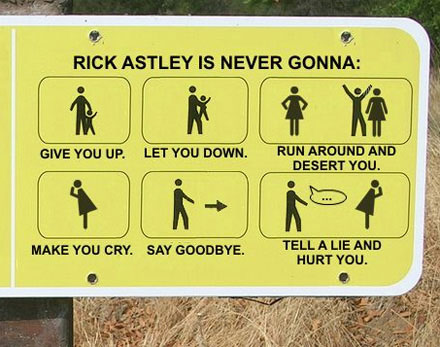
Similar to this, the members of 4chan have pulled out Rick Astley from naphthalene, a British singer whose last big hit was in the 80s. They made a prank in which more than 66 million internet users were tricked into watching his video "Never Gonna Give You Up" by posting it under the name of other popular video titles. That made Rick the most listened guy on the internet and eventually brought him an MTV award. This practice is now known as Rickrolling.

Following the same principle, last year they engaged them self in the famous Time magazine voting for the most influential person of the year 2008. This time they secured the first place for Christopher Poole, but under the name Moot. That was because in the time of voting, no one on earth didn’t know who was behind 4chan, except that his nickname was Moot. Moot became the most influential person in this internet poll, but the site editorial put him later at the top of the list of the most influential persons that now one knows about.

The last victim of 4chan was the latest MTV star Justin Bieber. First they arranged that every visit to some of his songs redirects you to some porn. Bieber had, among other things, offered to his fans to choose over the internet in which country should he additionally arranged a concert during his World Tour. 4chan arranged it to be North Korea, instead of Israel. Now this teenage star has to at least try to organize a visit to this dictatorship country.


Christopher Poole came out of anonymity last year, when one reporter discovered his identity. It turned out that no one close to him didn’t know that young and shy Chris is running one of the most powerful sites. That includes his mother. She discovered it when that reporter called their house for the first time. Poole is 22 today and he didn’t earn a single dollar from his site. Some have already started to call him the biggest internet fool because he created a site in the rank of Google and Facebook, but lives in debts, because he was paying his site hosting with his mothers credit card and made a debt bigger than 20 000 dollars.
read more...

Thursday, July 01, 2010

The very first internet clown!

From a lousy shoo-salesman Remy Gaillard has become one of the most famous men on the internet, mostly by recording hidden camera sketches. He dresses like Super Mario, Pac-Man, Rocky, he eats for free in McDonald's, and he was even greeted by the former president of France, Jacques Chirac.

It all began when he lost his job at a shoe store.


Eight years ago, anonymous from Montpellier, Remy Gaillard, skilled football player but without accomplished football career, had a lousy job that no one wouldn’t do except those who are forced to do it. It is commonly known among shoo-sellers that they serve most boring customers. When he lost even that job, in his grand desperation he was faced with so much useless used free-time. And what he did then? He decided to screw around. He showed up in 2002 Coupe de France final match in which Lorient won. He was dressed as a Lorient football player and celebrated the title on the field with other Lorient players. He was paying attention that the camera was constantly on him. The players didn’t notice that he was an intruder and even the president of France, Jacques Chirac, bought it and congratulated him on his dedication on the field. This video spread quickly on the internet and Remy, inspired with this popularity, started his new career.

Today he is “internet prankster”. As an intruder he started showing up on football and rugby matches, on political meetings, to invade television quizzes and shows. He apparently discovered a talent in himself to go around security wherever he wants, although, he was arrested many times for his acts. After some time he started to organize some really unusual situations for regular passengers on the street. He even started masking himself like famous characters from famous movies, cartoons and video games.

He teamed up with his good friend Gregory Laffargue who then started recording all of his accomplishments and posting them on YouTube. All this videos became top viewed. That made Remy Gaillard one of the most famous characters on the internet. World-wide also. He even decided to make his very own humble internet TV station, Nimportequi.com, which broadcasts more that hundred of his TV videos. Nimportequi in English means anybody, anyone, and it was drawn out of Remy’s motto: It’s by doing whatever that you become whoever.

He was dressed like Tarzan and jumped on people in the zoo. He was dressed like Super Mario and shocked people when they saw that imaginary character is driving his famous red carting pass them. He resurrected the character and image of Italian stallion Rocky Balboa. One of most viewed videos shows Remy practicing in supermarket like Sylvester Stallone in the famous movie. Wearing shorts and gloves on his hands, he rushed in refrigerator and started punching beef meat; he weighed himself on vegetable scale; he even run on a store conveyor belt. He recorded himself swimming on most unusual places, including fountains. On one occasion he dressed as big yellow ball called Pac Man and hired four statists to act as monsters who chase the yellow hero according to the scenario of one of most popular 2D games from the beginning of IT technology development. This way he celebrated 30 years since the creation of this game.

The beginning of 2008 Olympic Games he celebrated with a video called Decathlon. Among other things, he recorded himself performing long jump on a construction yard, and throwing vegetable from his shoulder in front of a grocery store. He was even slapped in the face on that occasion by the grocery seller. He even shared a practical advice on how to eat for free in McDonalds in one of his videos.

What to say about this guy? Is he gone mad? Well, I don’t think so. He didn’t do all of this for free. To popularity he gained persuaded Orangina to hire him in their advertisement of their famous juice. Video about Rocky, for example, he did to promote a sport site.

With all of this, once a shoo salesman has managed to make a profession from which he can live comfortably.

“The only reason I make all those videos is to be my own boss. I decide what I am going to do and when I am going to get up from bed. No one, and absolutely no one is telling me what to do” – explained Remy.  
read more...

Saturday, June 26, 2010

Internet – The Silk Ribbon Of Democracy!

Governments world-wide are starting more and more to use internet and state of the art technologies in order to control life of individuals. The fear of electronic totalitarianism is justified with possibilities created by this new digital era.


Justin Bieber is just 16 years old and he probably never heard of George Orwell. Big Brother is just an interesting reality-show for him where he can see nervous breakdowns of real people, live, where he can see spontaneous throw-ups after produced parties and where he can watch a few sex-scenes without trained professionals. Justin Bieber is absolutely not interested in the fact that the most visited sites like Facebook and YouTube are just one of the traps of digital era which all kinds of establishments are using to gain access to every little detail of ordinary people lives and gain total control of everyday functioning of society. No, he is not bored with that. Why? Well, Justin Bieber is currently the most famous star in America.

We are talking here about the latest teenage musical hero of the generation of people that isn’t yet qualified for acquiring a driving license, and a star that sold almost one million CDs in one month. With achieving this, he occupied the position of now adults Britney Spears and Justin Timberlake, or, decades before him, Michael Jackson and little actress Shirley Temple. But, he doesn’t have anything in common with them. Today, Bieber is the main idol of digital era and in difference with his famous predecessors, his parents didn’t had to bang on producers door and he didn’t had to appear in some kids commercial. He himself created his fame and exclusively over the internet. Three years ago he was just performing some songs, recording himself doing it and posting those videos on YouTube. Over time he became quite popular, he increased his communication with the fans and pretty soon he became interesting to the producers who invited him to make an album. More than a year ago he recorded his first album “My World” and really soon he had more than 50 million viewers on YouTube, not to say that he became the most commented gay on Twitter. His second album, which he published recently, is called “My World 2.0”. This sounds like the newer version of some computer program. Well, why not call it like that? Justin Bieber is an internet project.

This modern digitalization of life, which is spreading globally the fear of establishing a total system of control, on the other hand is offering a possibility to an ordinary person, to feel and live something he never could before. That was the case of Bieber, a regular kid from Ontario. He used this to become a world-wide known star. Just ten years ago he would have been just another failed music talent because he didn’t have a rich parent behind him.

Little Justin Bieber is the first one who realized this 21th century dream. But, on the other hand, he is also part of a new internet generation that doesn’t have some basic common knowledge’s. When he was asked about Germany, he said: “I don’t know what that word means. We don’t use it in America.” Obviously, he doesn’t care much for the fact that his every stupid statement is public and everyone has an access to it. He is taught that if he shows some interest for the word “Germany”, he could always type it on Google and check what that word means. He also isn’t interested with the fact that Pentagon could monitor everything he, or somebody else, is doing 24/7. Well, does he even know what Pentagon is?

The modern society is definitely in the middle of “electronic dictatorship” and “digital democracy”. While the youth have in their hands a possibility for breakthrough that their parent couldn’t dream of, that same internet, which is controlled by global centers of power, is monitoring every second of our lives and that contradicts with the elemental right of people, with privacy.  On this right, modern western civilization is based.

A recent research in UK, cradle of modern democracy, stated that their citizens are being monitored with more than 4 million cameras, this means that on average level there is one camera per 14 citizens, and that every visit to some internet site is just another way of getting information about some individual. Having in mind this research we could ask are self if we are living in a time where we must accept a concept of privacy that implies that privacy doesn’t exist.

In the last few years, western countries are working on a quiet suppression of civil privacy rights, and all this is a part of a fight against global terrorism. After the terrorist attack on New York, on September 11, 2001, Big Apple is slowly changing her name to Red Pepper because of many cameras that are monitoring the streets. Now, even internet is under heavy control. One of the last moves of British laburistic government was initiative for a law which controls internet flows to the measure that even ministers would have the right to block certain web pages. The British media called this a “silky loop of democracy” and some individuals are pointing out that internet as we know it now, is doomed to death. The totalistic countries are facing with less and less critics about their internet censorship, and west is dealing with ideas of using those methods in their own counties. In America, for example, two senators have suggested to Congress to allow president Obama right to call state of emergency and to shut down every internet network if it is in the interest of national security. Its like David Wood, a British expert on IT security, would say, we live in a society in which countries are hermetically sealing any access to data that are under their control, while in the same time, they want to find out as much as possible about their citizens.

To summarize, a modern individual is currently torn between the fact that we live in a world where making profile on Facebook is much more important than the country he lives in, dangers that the global terrorism is bringing, or to make love in his front yard without the fear it will be posted on the internet.

Despite the efforts of establishment and the centers of power to control the flows of internet, many theories which emerged in the last few years are saying that internet is the right path to complete democracy. Why? Because it allows a regular individual to engage himself much more directly in to the political life. Some extreme theories are predicting that one day, when complete digitalization occurs and everyone has a computer always by his side, everyone will be able to participate in decision-making, like in the village assemblies in the distant past.

Besides this utopia which is predicted by IT enthusiasts, the significance of further internet development is something we should all be encouraging. That is stating Mary Wolf, a former NBC producer and now a director of a computer center in one of Washington ghettos. For the last 15 years she is educating children in the neighborhood where no one has a college degree and where most kids are living without one or both parents, mostly on the edge of survival.

“I came to this place which is known about crime and I managed to build a computer center where kids could come after school instead of going out on the streets. They come here because they are able to see here, over the internet, that there is something else outside their gloom everyday life. Thanks to this I lived to watch how one of my students is receiving a college degree, nine years after his first visit to my center. He graduated  IT.” – she said.
read more...
Related Posts with Thumbnails