Showing posts with label FBI. Show all posts

Saturday, November 05, 2011

FBI's nightmare - D. B. Cooper

The FBI is still searching for D. B. Cooper, the protagonist of the only unsolved airline hijacking in American aviation history. In 1971, this man jumped from Boeing 727, carrying $ 200,000 of ransom money in his bag - and simply disappeared. 

The good guys from the FBI absolutly hate it when someone commits a very serious and very well-known criminal offense and then just – disappears. Then they have to scan the available evidence hundreds of times, year after year, and sometimes they are waiting for several decades only to start the investigation from scratch. Their working motto can be summed up in just one sentence: the suspect cannot be allowed to disappear so that no one can find him. 

Well, one man has done just that. And no one – how about that, FBI guys? –hasn’t found him. Neither him nor his money.

On the eve of Thanksgiving in 1971, a certain Dan Cooper – probably a false name – arrived at the international airport in Portland, Oregon. When he approached the flight counter of "Northwest Orient Airlines", he had with him just a black attaché case. He bought a one way ticket on Flight 305 - a 30-minute trip to Seattle, Washington. With the purchased ticket, Cooper entered the "Boeing 727-100" and took seat 18-C, which was near the tail. He lit a cigarette - then, in those happy times, you were allowed to do that - and ordered a bourbon and soda.

According to witnesses, he looked quite relaxed. The witnesses also said that he seemed to be in mid-forties, and about 180 centimeters tall. He was wearing a raincoat under which was a nice dark suit and nicely ironed white shirt.

When the plane took off – around 2:50 pm, local time – Cooper approached the flight attendant Florence Schaffner and thrust a piece of paper into her hand. Beautiful Florence, who was often approached by lonely businessmen, thought that he was just giving her his phone number. Without looking at it, she put the paper into her bag.

Miss, you'd better look at that note.” - Cooper leaned towards her and began to whisper. Decisively, not at all erotic.

On the piece of paper, written in capital letters, it said: “I have a bomb in my briefcase. I will use it if necessary. I want you to sit next to me. You are being hijacked.”

Schaffner did what he asked of her, and then quietly asked to see the bomb. Cooper opened his black bag just enough for Florence to see a red infernal machine.

I want $200,000 in unmarked 20-dollar bills. I want two back parachutes and two front parachutes. When we land, I want a fuel truck ready to refuel. No funny stuff or I’ll do the job.” – he said quietly. 

Flight 305's pilot, William Scott contacted Seattle-Tacoma Airport air traffic control, and they alarmed the local police and the Feds. Dan Cooper wasn’t nervous and behaved very politely. He ordered another bourbon and soda, paid the bill (while insisting that Schaffner keeps the change) and ordered a good lunch for the crew when they land in Seattle.

At exactly 4:39 pm, Cooper was informed that his demands are accepted. Six minutes later the plane landed. The kidnapper got what he wanted, and allowed all passengers, Schaffner, and another flight attendant, Alice Hancock, to leave the aircraft. He then went to cockpit and agreed details with the pilot and co-pilot:

We’ll fly southeast, toward Mexico City, with a speed below 190 kilometers per hour and altitude below 3,000 meters” – said Cooper. “We’ll land in Reno, Nevada to refuel, so that we can get to Mexico.

At 7:30 pm, “Boeing 727” took off again. Two F-106 fighter jets followed him at a safe distance. At 8:00 pm red light flashed in the cockpit – the sign that the pressure in the passenger compartment has suddenly changed. They offered help to Cooper through the intercom, but there was no response from him. Neither at that point nor in the next two hours.

At 10:15 pm, the plane landed in Reno. It was immediately surrounded with FBI agents, the sheriff, local police officers… After long deliberation, they decided to enter the plane. The crew was all right, but there was no sign of Cooper. 

He jumped from a plane with $ 200,000 in his bag, right into the vastness of the State of Washington. His body was never found. Nor money, of course. The weather was terrible that night, so everyone assumed that he died. No man couldn’t survive that. Especially if no one is waiting on the ground to provide him with assistance, drive him where he needs to…. But, what if he indeed survived?

The story of D. B. Cooper – how he would be called later – is the only unsolved airline hijacking in American aviation history. It is also the only one where no one doesn’t know the identity of the kidnaper, nor his motives. Thanks to that, Cooper became part of American folklore, some kind of Billy the Kid and Jesse James. He is the hero in movies, series, and he is also the guy according to which the main character of the legendary “Twin Peaks” is named. He is a daring thief for whom everyone who has ever heard of him is cheering.

Even those Americans, who have no problem with their state or the law, love such outsiders.

Here is a little guy who all by himself hijacked an airliner and got away with $200,000 of a big corporation's money, tweaked Uncle Sam's nose and has gotten away with it” - Ralph Himmelsbach evaluates today, a retired FBI agent, and one of many who, having given up looking for Cooper, wrote a book about his unsuccessful mission.

This case is probably still open because Cooper managed to embarrass one entire organization. The sum he took as ransom is not huge, even for standards at the time of the hijacking.  No one died, and no one was even hurt in his campaign - except FBI’s pride, something that this organization never publicly admitted.

In 2008, the Feds once again began to dig through the memory of Dan Cooper. 

Would we still like to get our man? Absolutely.  And we have reignited the case.” - said a senior FBI official, and invited general public to visit the official website of the Bureau, where are, for the first time, uploaded sketches of Dan Cooper as he looked on that day, and how he would look today, 40 years later. There are also several 20-dollar bills that one boy found in 1980.

In these forty years, FBI has investigated more than 1,000 people and had, at one point, a list of ten suspects. Eventually, none of them completely fit Cooper’s description, or had a very good alibi. The case is now in the hands of agent Larry Carr, who is born in Seattle and was only four years old when  Cooper went on his mission, from which he emerged as a winner or a dead man, or maybe both.

The choice is yours, and there are plenty of versions. If you believe to a taxi driver who collects his customers from San Diego airport, D. B. Cooper was a gambler who died from cocaine overdose in California 15 years ago. If you believe to a persistent real estate agent, D. B. Cooper was her late husband, a heavy smoker and a former prisoner, who told her his most kept secret as he lay dying in Pensacola hospital. If you believe the FBI, D. B. Cooper died on that very night.

The best “lead” the Feds ever had was a Vietnam veteran named Richard McCoy. Just a few months after the famous November of 1971, he tried to imitate Cooper, but this time over Utah. Everything went according to plan - a bit gluttonously, he demanded $ 500,000 instead of "modest" 200,000 that D.B. Cooper took.  But when he jumped from the plane, he was caught and arrested. He was convicted, but he didn’t served his sentence for very long, because, in 1974, he was killed by prison guards for allegedly trying to escape.

In 1991, former FBI agent Russell Calame wrote a book in which he brought “strong evidence” that Cooper and McCoy were the same person. His former colleagues were not so convinced in his story, mainly because the descriptions given by both aircraft flight attendants did not match.

Then there is the Lyle Christiansen, Minnesota resident who spent years trying to convince the FBI that Cooper was, in fact, his deceased brother, Kenneth Christiansen, a former paratrooper. From 2003 and onwards, he regularly sent letters to the Feds, bringing new evidence that would substantiate his thesis. FBI never believed him. Just like they eliminated Duane Weber, who said on his deathbed that he is, in fact, Cooper. However, DNA tests showed that he was lying.

Mr. Carr, who is now in charge of the investigation, will say that a lot of things happened on that November, but that only a fraction from what was later told is actually the truth. In the first place, he actually doesn’t believe that Cooper was still alive when he fell on the ground.

We originally thought Cooper was an experienced jumper, perhaps even a paratrooper” – says agent Carr. We concluded after a few years this was simply not true. No experienced parachutist would have jumped in the pitch-black night, in the rain, with a 200-mile-an-hour wind in his face, wearing loafers and a trench coat. It was simply too risky. He also missed that his reserve 'chute was only for training, and had been sewn shut—something a skilled skydiver would have checked.

If everything went according to his plan, Cooper would have landed somewhere in the Cascade Mountains, a mountain range of western North America  and southern west of Canada, where the highest peak is  about 4,300 meters above sea level. That part of America is far away from civilization, but not that much far that it is necessary more than 40 years for someone’s body to be found.

What is interesting is that, in 1980, near the Columbia River, a boy found a bundle of 20-dollar bills - the same ones that Cooper received on that November afternoon at the Seattle-Tacoma airport. But there was only $5.800 - What about the rest?

Maybe a hydrologist can use the latest technology to trace the $5,800 in ransom money found in 1980 to where Cooper landed upstream. Or maybe someone just remembers that odd uncle.” – said Carr.

If investigators find just a bone that belongs to Dan Cooper, that will be enough for them to close the case with DNA analysis. But, as long as there is no body, the thought that he is still alive somewhere – or that he was alive for many years after 1971 – and that he is enjoying the Caribbean sun and drinks cocktails while watching movies and reading books about himself, will not disappear. And even agent Carr doesn’t want to write off this possibility.

If he's alive today, he'd be about 85 years old. Maybe one day I'll be sitting at my desk and I'll get a call from an old man who says, 'You're not going to believe this story'”.
read more...

Friday, October 07, 2011

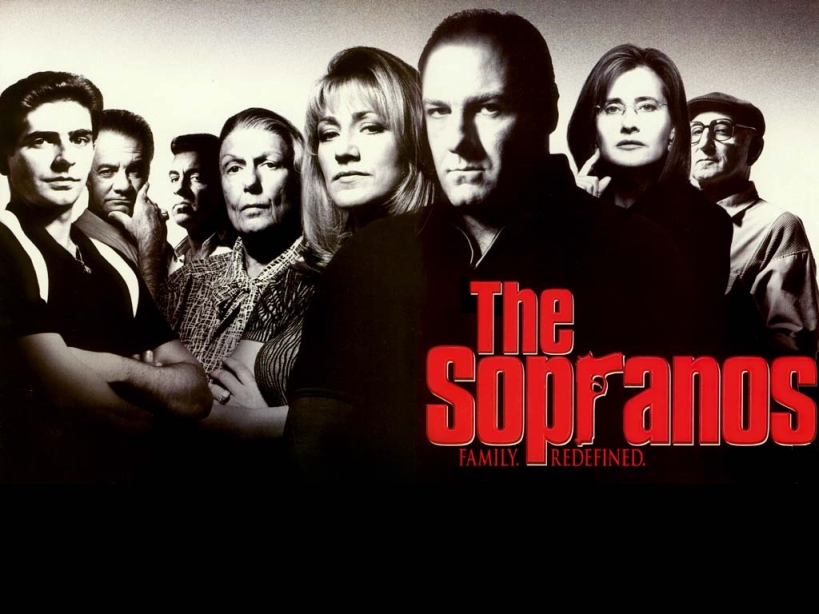
The Sopranos – more than a TV series!

The Sopranos are definitely an integral part of American pop culture since the series premiered in 1999. Through the characters of this series many things were explained to the people of America - Al Qaeda terrorist attack on America, presidential elections, the new bosses in the White House...


Several days after the terrorist attack on World Trade Center in 2001, New York Times wrote that nothing would ever be the same in America – not even Tony Soprano’s ride home to his house in North Caldwell, New Jersey. That is how they tried to describe the state of the American nation.

Al Qaeda's terrorist attack and its victims are described in hundreds of texts and hours of documentary television programs, but New York Times’ depiction of tragedy and post-terrorist paranoia through the opening title sequence of “The Sopranos” is probably the most picturesque.

Of course, they were referring to the particular frame from the opening sequence in which, in the side rear-view mirror of Tony Soprano’s car, twin towers of the World Trade Center are shown. Shortly after the attack, the creator of the series, David Chase, removed the sequence with "deceased" twins.

New York Times’ depiction of apocalyptic date was not the only case in which the series "The Sopranos" were used for picturesque display of American society’s pulse. There are hundreds of examples where these famous TV mobsters served as first aid in a quicker understanding of social conditions in United States. 

One of the most famous citations of Sopranos took place during the elections in United States, in 2004. In the last presidential debate between George Bush and John Kerry, the Democratic candidate compared George W. Bush with Tony Soprano: Being lectured by the president on fiscal responsibility is a little bit like Tony Soprano talking to me about law and order in this country.


In the mid nineties, creator of the series, David Chase, offered the pilot episode of "The Sopranos" to all prestigious American TV stations, including the famous company "Fox". They rejected the offered material because they were scared of its content - previously unseen combination of violence, explicit sex, and a completely new TV language spiced with curses, which the characters of the series often used. Fortunately, the most powerful U.S. cable network, HBO, recognized a golden goose in Chase’s mobster saga and from January 10, 1999, started broadcasting “The Sopranos”.

From the pilot episode and on, an army of sociologists, psychologists and various other theorists was provoked with the life of waste management king and mobster capo who, despite of dozens of treatments in Dr. Melfi’s psychiatric clinic and hundreds of grams of Prozac, is more and more struggling to balance his private and mob life.


From the very first episode of this gangster TV hit, there was literally not a single week without an analytical article by some well-known media, or news about “The Sopranos”, whether it was about the shocking registration of first mobster gay fellatio seen on some gangster movie or series, or an announcement that this series increased the number of Americans who visit  psychiatrists (under the influence of Tony Soprano’s sessions) and all the way to the disturbing news that the real crime family DeCavalcante (according to some, an inspiration for “The Sopranos”) recruited new members thanks to the popularity of the series.

From the beginning of the series, “The Sopranos” encountered resistance from the Italian community in America, which believed that the series harmed the image of Italians. On Columbus Day, Italian-American holyday, the community had strongly protested against the presence of actors of this series in their celebration. A popular former New York Mayor, Rudy Giuliani, a big fan of “The Sopranos”, had to personally intervene and protect the actors. One of the most famous members of the Italian community in America that has publicly criticized the depiction of Italians by “The Sopranos” was Victoria Gotti, daughter of the last great don from the Gambino crime family, John Gotti.

On the other hand, New York Times proclaimed “The Sopranos” as the most important piece of the American pop-culture in the second half of the 20th century. Also, on many lists of key events at the turn of the nineties, “The Sopranos” are highlighted. The most bizarre were the theories that connected the mythology of “The Sopranos” with Greek mythology, justifying this by the fact that the series integrated several archetypes: Zeus, Hera, and even Zeus’ seduction of mortal women.

Fiction and real life have constantly changed roles, like in the case of an actor in this series Lillo Brancato Junior, who was accused of robbery and armed assault on a police officer. But the key episode related to this series occurred on March 3, 1999, approximately two months after the series premiered. On that day, a black Pontiac was rolling the same rode Tony Soprano is taking in the opening sequence of the series, going from New York to New Jersey and approaching the headquarters of the DeCavalcante crime family. In the Pontiac were Mafia capo Anthony Rotondo, a "soldier" of DeCavalcante crime family, Joseph Sclafani, and two family members, which the FBI labeled as Ralph and Bill.

Sitting comfortably in the padded seats of the Pontiac, these travelers started a conversation about “The Sopranos” while enjoying their own dramatic alter egos. Their conversation completely depicted Quentin Tarantino’s image of mafia world, more accurately, something like the beginning of his movie Reservoir Dogs where an obscure group of gangsters is discussing about Madonna and her song "Like a Virgin".

The whole story of the clan DeCavalcante soon found herself on the table of FBI agents and it was recorded with a hidden microphone by Ralphie Guarino, who was later proclaimed as an "intruder" in the New Jersey mafia family. The recorded conversation of the DeCavalcante clan members regarding “The Sopranos” were used in the courtroom during the trial against the mafia family where capo Anthony Rotondo admitted that he was delighted with “The Sopranos”, especially because he identified himself with many details of the series.


Mobsters in college and the Lady Gaga’s first job

* In 2004, at the University of Toronto, Professor Maurice Yakovar began a series of lectures on "The Sopranos".

* In April 2005, the Supreme Court of Orange County, California sentenced twenty-two year old Jason Bautista on 25 years of imprisonment for first-degree murder. In 2003, Bautista killed his mother Jane with a knife because she reminded him of Tony Soprano’s mother Livia. At the court, Bautista said that he chopped the head and the hands of his mother because he learned how to hide the identity of a victim from one of the episodes of “The Sopranos”.

* In 2002, the British magazine Uncut proclaimed “The Sopranos” as best drama series in television history.

* In 2001, Lady Gaga appeared in the episode "The Telltale Moozadell". She was a teenager at the time.
read more...

Sunday, March 27, 2011

KKK – From murderers to folklore society

Racist movement that has done most terrible crimes in the United States, in the twenties and sixties of the 20th century, still exists. But Ku Klux Klan never recovered after a group of enthusiasts from the FBI broke their backbone in Mississippi.

Although Ku Klux Klan was founded in 1865 (in the defeated South after the Civil War, as a direct consequence of the abolition of slavery), this movement was relatively quiet until the turbulent twenties of the last century. Then, some of their worst crimes they committed in the sixties. In spite of having its supporters in all forms of government (even in the Oval Office), the backbone of the Klan was broken in the late sixties in Mississippi after which KKK never recovered, although they still exist today.

The first reports of BOI (Bureau of Investigation) agents, a small unit whose work depended mostly on the enthusiasm and good will of several dozen young men who wore hats and were clumsy on the trigger, said that radical members of KKK were organizing and meeting secretly. They also noticed that KKK members were following a series of hidden symbols and protocols, and that they are prone to violence and lynching. Their goal was clear: racism, segregation and destruction of the black race. Ties with the police, judiciary, and rich industrialists from the South were confirmed, but not proven.


Crimes committed during the twenties were horrible: hanging of innocent people, stamping, cutting of limbs and the expulsion of all those who oppose KKK. All of this was enhanced with intimidation tactic, which became a symbol of the Klan - burning of crosses and white hoods.

- A journalist from New Orleans brought me a letter from the Governor of Louisiana, John. M. Parker. The Governor has been unable to use either the mails, telegraph, or telephone because of interference by the Klan. The governor is seeking assistance because local authorities are absolutely inactive. He fears that judges, prosecutors and police officers, all of them, are corrupted - J. Edgar Hoover informed the Bureau and initiated the first federal investigation of the Klan. In the letter Hoover received it was stated that the Klan has completely taken over the entire northern half of the country and are killing all those who oppose them.

In the sixties, KKK was responsible for the death of many people. Their motive was the so-called Freedom Summer, a movement that aimed to register all dark-skinned citizens of Southern states in the electoral roll, and to give them a right to vote.  With that, a campaign of terror began. One of the persons that were thorn in the eye of KKK was New Yorker Michael Schwerner (1939-1964). Schwerner organized boycotts of all shops that did not allow African-Americans to enter. Three months later his body was found buried behind a local farm. 21 suspects were arrested, including Sheriff Cecil Price, his deputy and Baptist minister Edgar Ray Killen. After three years of trials, seven of those suspects were convicted, but none of them for the murder of Schwerner.

The anger of the nation resulted in Civil Rights Act of 1964, which abolished segregation.

The hunt for the white hoods started in 1966, after an attack on Vernon Dahmer, famous human rights activist. He died of severe burns a day after his house was firebombed by the supporters of KKK. More than 120 witnesses, informers and moles assisted the FBI investigation. Imperial Wizard of the White Knights of the Ku Klux Klan in Mississippi, Samuel Bowers, who ordered the attack on Dahmer, surrendered himself. He was soon sentenced to seven years in prison and the Klan began to lose its breath.

Bowers and Killen, leaders and one of the main ideologists of KKK movement, were persecuted and often ended up in detention. The Klan never again resurrected, at least not in the form he had in the twenties and sixties.

The FBI estimates that there are currently several hundred small and uninteresting branches of KKK in the U.S.. It is estimated that they have about 8,000 members in 179 communities. They are mostly posing for tabloids and organizing marches with skinheads.


FBI agents were constantly in fear of revenge

James Ingram (1932-2009), former FBI agent, who, in the period of 1975-1983, worked on the most serious cases of racial murders in Mississippi during sixties, said that agents were constantly in fear of revenge of the Klan. 

Agents would always watch. They’d look underneath their cars to make sure we did not have any dynamite strapped underneath … Then you’d open your hood and make sure that everything was clear there. We had snakes placed in mailboxes. We had threats. We infiltrated the Klan in many ways. We had female informants. … And we had police officers that were informants for us.”
read more...
Related Posts with Thumbnails