Showing posts with label culture. Show all posts

Friday, October 07, 2011

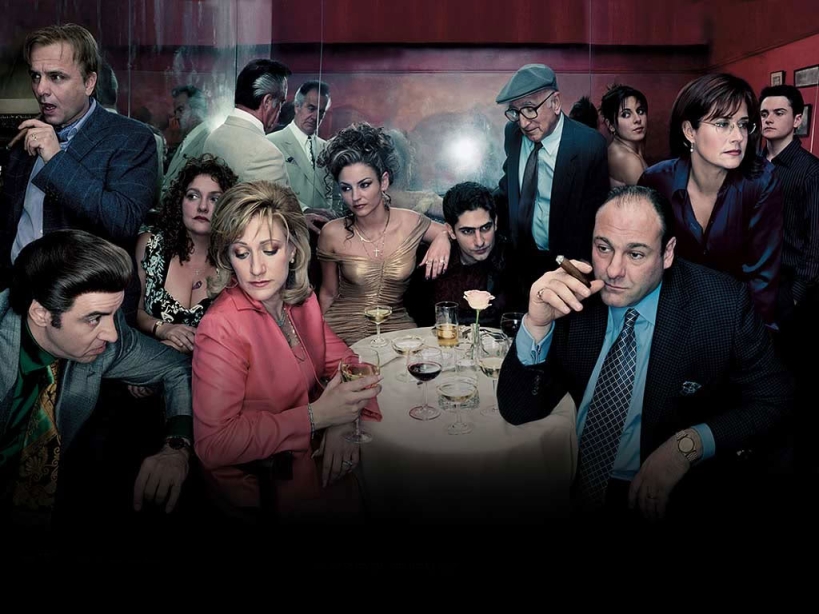
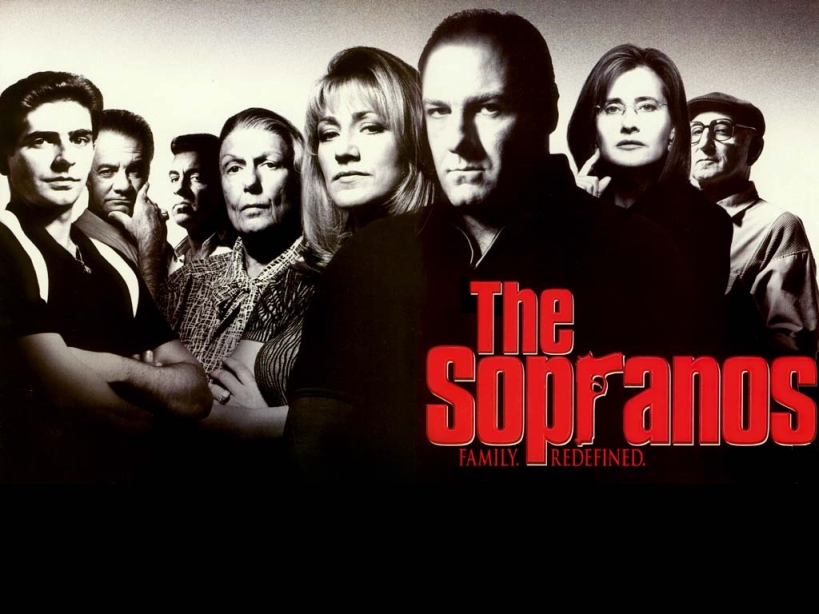
The Sopranos – more than a TV series!

The Sopranos are definitely an integral part of American pop culture since the series premiered in 1999. Through the characters of this series many things were explained to the people of America - Al Qaeda terrorist attack on America, presidential elections, the new bosses in the White House...


Several days after the terrorist attack on World Trade Center in 2001, New York Times wrote that nothing would ever be the same in America – not even Tony Soprano’s ride home to his house in North Caldwell, New Jersey. That is how they tried to describe the state of the American nation.

Al Qaeda's terrorist attack and its victims are described in hundreds of texts and hours of documentary television programs, but New York Times’ depiction of tragedy and post-terrorist paranoia through the opening title sequence of “The Sopranos” is probably the most picturesque.

Of course, they were referring to the particular frame from the opening sequence in which, in the side rear-view mirror of Tony Soprano’s car, twin towers of the World Trade Center are shown. Shortly after the attack, the creator of the series, David Chase, removed the sequence with "deceased" twins.

New York Times’ depiction of apocalyptic date was not the only case in which the series "The Sopranos" were used for picturesque display of American society’s pulse. There are hundreds of examples where these famous TV mobsters served as first aid in a quicker understanding of social conditions in United States. 

One of the most famous citations of Sopranos took place during the elections in United States, in 2004. In the last presidential debate between George Bush and John Kerry, the Democratic candidate compared George W. Bush with Tony Soprano: Being lectured by the president on fiscal responsibility is a little bit like Tony Soprano talking to me about law and order in this country.


In the mid nineties, creator of the series, David Chase, offered the pilot episode of "The Sopranos" to all prestigious American TV stations, including the famous company "Fox". They rejected the offered material because they were scared of its content - previously unseen combination of violence, explicit sex, and a completely new TV language spiced with curses, which the characters of the series often used. Fortunately, the most powerful U.S. cable network, HBO, recognized a golden goose in Chase’s mobster saga and from January 10, 1999, started broadcasting “The Sopranos”.

From the pilot episode and on, an army of sociologists, psychologists and various other theorists was provoked with the life of waste management king and mobster capo who, despite of dozens of treatments in Dr. Melfi’s psychiatric clinic and hundreds of grams of Prozac, is more and more struggling to balance his private and mob life.


From the very first episode of this gangster TV hit, there was literally not a single week without an analytical article by some well-known media, or news about “The Sopranos”, whether it was about the shocking registration of first mobster gay fellatio seen on some gangster movie or series, or an announcement that this series increased the number of Americans who visit  psychiatrists (under the influence of Tony Soprano’s sessions) and all the way to the disturbing news that the real crime family DeCavalcante (according to some, an inspiration for “The Sopranos”) recruited new members thanks to the popularity of the series.

From the beginning of the series, “The Sopranos” encountered resistance from the Italian community in America, which believed that the series harmed the image of Italians. On Columbus Day, Italian-American holyday, the community had strongly protested against the presence of actors of this series in their celebration. A popular former New York Mayor, Rudy Giuliani, a big fan of “The Sopranos”, had to personally intervene and protect the actors. One of the most famous members of the Italian community in America that has publicly criticized the depiction of Italians by “The Sopranos” was Victoria Gotti, daughter of the last great don from the Gambino crime family, John Gotti.

On the other hand, New York Times proclaimed “The Sopranos” as the most important piece of the American pop-culture in the second half of the 20th century. Also, on many lists of key events at the turn of the nineties, “The Sopranos” are highlighted. The most bizarre were the theories that connected the mythology of “The Sopranos” with Greek mythology, justifying this by the fact that the series integrated several archetypes: Zeus, Hera, and even Zeus’ seduction of mortal women.

Fiction and real life have constantly changed roles, like in the case of an actor in this series Lillo Brancato Junior, who was accused of robbery and armed assault on a police officer. But the key episode related to this series occurred on March 3, 1999, approximately two months after the series premiered. On that day, a black Pontiac was rolling the same rode Tony Soprano is taking in the opening sequence of the series, going from New York to New Jersey and approaching the headquarters of the DeCavalcante crime family. In the Pontiac were Mafia capo Anthony Rotondo, a "soldier" of DeCavalcante crime family, Joseph Sclafani, and two family members, which the FBI labeled as Ralph and Bill.

Sitting comfortably in the padded seats of the Pontiac, these travelers started a conversation about “The Sopranos” while enjoying their own dramatic alter egos. Their conversation completely depicted Quentin Tarantino’s image of mafia world, more accurately, something like the beginning of his movie Reservoir Dogs where an obscure group of gangsters is discussing about Madonna and her song "Like a Virgin".

The whole story of the clan DeCavalcante soon found herself on the table of FBI agents and it was recorded with a hidden microphone by Ralphie Guarino, who was later proclaimed as an "intruder" in the New Jersey mafia family. The recorded conversation of the DeCavalcante clan members regarding “The Sopranos” were used in the courtroom during the trial against the mafia family where capo Anthony Rotondo admitted that he was delighted with “The Sopranos”, especially because he identified himself with many details of the series.

Mobsters in college and the Lady Gaga’s first job

* In 2004, at the University of Toronto, Professor Maurice Yakovar began a series of lectures on "The Sopranos".

* In April 2005, the Supreme Court of Orange County, California sentenced twenty-two year old Jason Bautista on 25 years of imprisonment for first-degree murder. In 2003, Bautista killed his mother Jane with a knife because she reminded him of Tony Soprano’s mother Livia. At the court, Bautista said that he chopped the head and the hands of his mother because he learned how to hide the identity of a victim from one of the episodes of “The Sopranos”.

* In 2002, the British magazine Uncut proclaimed “The Sopranos” as best drama series in television history.

* In 2001, Lady Gaga appeared in the episode "The Telltale Moozadell". She was a teenager at the time.
read more...

Wednesday, October 27, 2010

Better Side of Nicotine!

Each pack of cigarettes has a warning about the brutal truth of harmful effects of tobacco, but it does not inform that smoking bans around the world are creating a new trend – the number of marriages, friendships and close relationships is increasing between the people that are pounded in the rooms for smokers.

Each pack of cigarettes tells us that smoking causes cancer of all possible internal organs, that it has negative consequences for pregnancy...  But, the pack does not say that smoking, in a way, modeled today’s culture of entire civilization and that in recent decades it shaped the lifestyle of modern men and women.

Anti-smoking mania that is currently affecting the western world came to the extent in which the cigarettes are thrown out of the cultural and social life.

Besides prohibiting the advertisement of cigarettes, their display in films and on television also is avoided, and recently, a great "rewriting of history" is in fashion.

In the United States, they erased a cigarette from the hand of the famous Beatle, Paul McCartney, on the cover of re-released album "Abbey Road", and the French have removed cigarettes from the paintings of Jean Paul Sartre and Albert Camus, that adorned their ceremonial post stamps. If smokers, hundreds of years ago, were so "notorious", the question is, how would the present-day popular culture look like, and who would, for example, instead of Humphrey Bogart, stand for a cultural icon of the 20th century. For, although Bogart died back in 1957, every kid now knows that he was a great charmer, who never took a cigar out of his mouth. He based his image on a specific method of smoking, holding a cigar in his mouth between two smokes. Such smoking even entered in the Oxford Dictionary, as a verb “bogarting”.


If the new technologies initiate remastering of the old movies, like the French did with their stamps, it would be likely that "Casablanca", from a cult film, will become a comedy, in which the main actor is doing something strange with his hands. Richard Klein, a professor of French literature and the author of “Cigarettes are Sublime”, a kind of history of smoking, said that “Casablanca" is a type of a film in which cigarettes are providing specific light and character. Klein noted another significant "contribution" of Bogart’s cigarettes; if there was not so much smoking in Casablanca, Franklin Roosevelt would not be so thrilled with the film in 1942, and he would not set up a meeting with Churchill and De Gaulle in Casablanca at the beginning of 1943, where there was made a significant improvement in the U.S. and France relations. America, then, ceased to maintain relations with the Government in Vichy and De Gaulle’s move was acknowledged,  and who knows how the course of World War II would have been if Roosevelt and De Gaulle had not met in Casablanca.  Klein also noted that Hitler was sworn anti-smoker, and that, because of this, smoking at that time was accepted as a kind of patriotic duty.

When it comes to popular culture, one should ask what would happen to the famous scene from the movie "Basic Instinct" in which Sharon Stone crossed legs and, close-up, showed her crotch and became a symbol of sexuality for teenagers. To reiterate, this is performed at a hearing where she was a suspect for murder, during which she lit a cigarette, although they cautioned her that it is prohibited. And, in the fatal moment, she uttered a "cult" line: "What are you going to do, arrest me for smoking?"

Smoking, however, is not only an integral part of the cultural heritage of human civilization. Cigarettes did for a long time kill our internal organs, but with an extremely proactive marketing of tobacco companies, cigarettes became a significant social factor. Hypothetically speaking, if no one smoked, the men around the globe would not have a significant advantage in winning the women. For years the older seducers teach kids that you should always have a lighter with you even if you do not smoke, because you never know when a girl needs a fire. For a long time, the first lit cigarette usually went after the first intercourse, and for boys it was the entrance into the world of men.

Cigarettes, on the other hand, had a significant impact in the "conquest of freedom" of weaker gender in their fight for gender equality, and, eventually, they became a symbol of female emancipation and independence. Puritans in America, in the first period after the Second World War thought that there is a subconscious link between the consumption of cigarettes and sexuality, emphasizing "the rigidity of the situation in which a woman puts something between the lips."

So, during the seventies, picture of a woman with a cigarette represented a symbol of independence and freedom from the conservative morality, and that was embodied in an advertising campaign for cigarettes, "Virginia Slims" with the slogan "You've come a long way, baby." This send a message: a woman that smokes a cigarette is a free woman, she enjoys it independently from the man who wants to approach her with a lighter.

In Europe, tobacco control is gaining momentum in the last decade, while in America this struggle is far more present in people's lives, which is why America has become known as a country where smoking is forbidden even in your own apartments because the neighbors may sue you because you are poisoning them through the ventilation system.

Since 1965, the percentage of smokers in America dropped from 45 to about 20 percent of the total population. Hannah Arendt, German political theorist of Jewish origin, had once written that the smokers in line reminiscent her of an unpleasant scenes from her youth, when Jews were still entering the cattle wagons on their way to the gas chambers. That feeling smokers may experience at any airport in Europe, where visitors are forced to seek special rooms for smoking, and where they are pushed as in a nature reserve.  In these “smoking reserves” , however, it is easy to see that relations among people are somewhat closer, because, as non-smokers mind their own business around the airport, smokers chat in a small space.

 A
In America there is a phenomenon of "smoker's lobby" in large corporations, where the closest relations are made  in the very smoking rooms. This is, maybe, best shown in the most popular sitcom in the last decade, "Friends", when one of the main characters deliberately starts to smoke because she saw that those colleagues of hers who go on smoke-break are getting along better with the head of the company.

Therefore, among smokers who are becoming a new legal category, a new kind of solidarity and opportunity for bonding is created. It is interesting that Ireland was the first country in Europe to introduce a general smoking ban, and that included smoking in pubs, which was seen as a major blow to their local culture. The first effect was a decline in visits to pubs, but in the long term, sociologists have noted another effect - increase in the number of marriages. This was explained with increased interaction between the smokers who were, after the ban, forced to attend small spaces for smokers. In simple words, the average guy in smoking zone has better chances with a girl.

United Kingdom also adopted a total ban on smoking in 2007, which led to the closure of many pubs, particularly low-profit local "holes" for fun for the people in the neighborhood, who felt that it was not right to drink beer without a cigarette.  The respected British weekly newspaper The Economist noted that in the first two years of ban existence, about 27 pubs per week was closed on the island. Some pubs have managed to adopt by attract wine lovers, and almost all pubs have started to serve food (which until recently was unthinkable).

With a change of pub character, "lifestyle" of an average Briton was also changed.  Until the smoking ban, 75 percent of Britons has visited pubs, of which two thirds were considered as regular guests. This is how the journalist of The Economist described a new situation:  “The tables are sticky with half-dried beer. There is a wide range of beers to choose from, but often it tastes as if the pipes have not been cleaned for weeks. Until smoking was banned from pubs in 2007, the front half of pubs stank of cigarettes while the back half was suffused with a smell from the toilets. Sadly, today, the tables are as sticky as ever and, while the cigarette smoke has gone, that has only allowed the toilets' odour to pervade the entire place.”

The only argument which "fighters for the rights of smokers" can not deny are many medical reports that prove that smoking is not only harming health of those who smoke, but people around them to. This is why these bans are slowly conquering the world. Greece is one of the last European countries that was scheduled to introduce a ban in restaurants from September 1 this year, but that was unrealistic in a country that still has 40 percent of smokers. Association of restaurateurs responded with initiative “ashtrays on the tables again”, and the Greeks continued to smoke like chimneys. Most bizarre ban on smoking in Europe is certainly the one in Amsterdam. In front of a certain coffee shop, housed in the middle of Red Light District, opposite to the local church, stands a large sign: "If you smoke marijuana, which is mixed with tobacco, then smoking is permitted only outside. If you smoke marijuana without tobacco, then smoking is allowed inside."


The first ban

The first known smoking ban was introduced in Mexico, in 1575, and involved the use of tobacco in the churches, in all the Spanish colonies in the Caribbean. Then the Turkish Sultan Murad fourth banned smoking in the Ottoman Empire, and Pope Urban Seventh threatened to "excommunicate anyone who is caught taking tobacco in the church, whether he is smoking, chewing or inhaling it through the nose."

The first "secular" building where smoking was prohibited is the old government building in Wellington, New Zealand, where smoking was prohibited in 1876. The reasons for this prohibition, however, were not medical but in fear of fire, since this building is still the second largest wooden building in the world.
read more...

Tuesday, October 12, 2010

Culture or Science, Whatever!

Many anecdotes even today tell about the not so bright Soviet politician Leonid Brezhnev (1906-1982), President of the Soviet Union and Secretary General of the Central Committee of the Communist Party of that country.

Leonid’s political speeches, that he as the president had a chance to keep, were, in fact, often, very long. Sometimes they lasted for six hours since Brezhnev read the original, and the copy of the speech that they gave him every time before he climbed on the podium!

On one occasion, Leonid Brezhnev visited the south part of the country where he was supposed to speak about science. But, his adviser mistakenly gave him the speech about culture.

Leonid began to read...

Peroration lasted, and he did not even notice what he is actually speaking.

Others have noticed, but they did not dare to say anything
read more...

Wednesday, June 23, 2010

Beer: Men Drink – Women Invention!

Although beer is considered as men drink, women played important role in its history, claims Jane Peyton, a British historian. 

She said that women invented beer. She also said that for a long time women were the only one allowed to stay in Alehouses and consume beer. Beer was considered as food and like that it was “under the authority” of women.

7000 years ago, in Sumer and Mesopotamia, only women were allowed to manufacture beer and run the alehouses, and this potion was considered as a gift of goddesses not gods, like in many other ancient civilizations.

Even in the Nordic culture, women were the ones who manufactured beer. All manufacturing equipment was in theirs possession. Finland even has a legend about three women who invented beer and among the ingredients that were used was beer’s slobber and honey.

In the English culture women were also the ones who manufactured beer. As a drink, it was very popular among female population and there are records that even Queen Elizabeth I regularly drank beer while eating breakfast. Beer was then considered as one of basic provisions. With industrial revolution and new ways of manufacturing of this alcoholic drink, the role of women decreased.

“I know that men will be shocked to hear this but for their beer they should be thankful to women” – stated Peyton.  
read more...
Related Posts with Thumbnails