Showing posts with label united states. Show all posts

Saturday, November 05, 2011

FBI's nightmare - D. B. Cooper

The FBI is still searching for D. B. Cooper, the protagonist of the only unsolved airline hijacking in American aviation history. In 1971, this man jumped from Boeing 727, carrying $ 200,000 of ransom money in his bag - and simply disappeared. 

The good guys from the FBI absolutly hate it when someone commits a very serious and very well-known criminal offense and then just – disappears. Then they have to scan the available evidence hundreds of times, year after year, and sometimes they are waiting for several decades only to start the investigation from scratch. Their working motto can be summed up in just one sentence: the suspect cannot be allowed to disappear so that no one can find him. 

Well, one man has done just that. And no one – how about that, FBI guys? –hasn’t found him. Neither him nor his money.

On the eve of Thanksgiving in 1971, a certain Dan Cooper – probably a false name – arrived at the international airport in Portland, Oregon. When he approached the flight counter of "Northwest Orient Airlines", he had with him just a black attaché case. He bought a one way ticket on Flight 305 - a 30-minute trip to Seattle, Washington. With the purchased ticket, Cooper entered the "Boeing 727-100" and took seat 18-C, which was near the tail. He lit a cigarette - then, in those happy times, you were allowed to do that - and ordered a bourbon and soda.

According to witnesses, he looked quite relaxed. The witnesses also said that he seemed to be in mid-forties, and about 180 centimeters tall. He was wearing a raincoat under which was a nice dark suit and nicely ironed white shirt.

When the plane took off – around 2:50 pm, local time – Cooper approached the flight attendant Florence Schaffner and thrust a piece of paper into her hand. Beautiful Florence, who was often approached by lonely businessmen, thought that he was just giving her his phone number. Without looking at it, she put the paper into her bag.

Miss, you'd better look at that note.” - Cooper leaned towards her and began to whisper. Decisively, not at all erotic.

On the piece of paper, written in capital letters, it said: “I have a bomb in my briefcase. I will use it if necessary. I want you to sit next to me. You are being hijacked.”

Schaffner did what he asked of her, and then quietly asked to see the bomb. Cooper opened his black bag just enough for Florence to see a red infernal machine.

I want $200,000 in unmarked 20-dollar bills. I want two back parachutes and two front parachutes. When we land, I want a fuel truck ready to refuel. No funny stuff or I’ll do the job.” – he said quietly. 

Flight 305's pilot, William Scott contacted Seattle-Tacoma Airport air traffic control, and they alarmed the local police and the Feds. Dan Cooper wasn’t nervous and behaved very politely. He ordered another bourbon and soda, paid the bill (while insisting that Schaffner keeps the change) and ordered a good lunch for the crew when they land in Seattle.

At exactly 4:39 pm, Cooper was informed that his demands are accepted. Six minutes later the plane landed. The kidnapper got what he wanted, and allowed all passengers, Schaffner, and another flight attendant, Alice Hancock, to leave the aircraft. He then went to cockpit and agreed details with the pilot and co-pilot:

We’ll fly southeast, toward Mexico City, with a speed below 190 kilometers per hour and altitude below 3,000 meters” – said Cooper. “We’ll land in Reno, Nevada to refuel, so that we can get to Mexico.

At 7:30 pm, “Boeing 727” took off again. Two F-106 fighter jets followed him at a safe distance. At 8:00 pm red light flashed in the cockpit – the sign that the pressure in the passenger compartment has suddenly changed. They offered help to Cooper through the intercom, but there was no response from him. Neither at that point nor in the next two hours.

At 10:15 pm, the plane landed in Reno. It was immediately surrounded with FBI agents, the sheriff, local police officers… After long deliberation, they decided to enter the plane. The crew was all right, but there was no sign of Cooper. 

He jumped from a plane with $ 200,000 in his bag, right into the vastness of the State of Washington. His body was never found. Nor money, of course. The weather was terrible that night, so everyone assumed that he died. No man couldn’t survive that. Especially if no one is waiting on the ground to provide him with assistance, drive him where he needs to…. But, what if he indeed survived?

The story of D. B. Cooper – how he would be called later – is the only unsolved airline hijacking in American aviation history. It is also the only one where no one doesn’t know the identity of the kidnaper, nor his motives. Thanks to that, Cooper became part of American folklore, some kind of Billy the Kid and Jesse James. He is the hero in movies, series, and he is also the guy according to which the main character of the legendary “Twin Peaks” is named. He is a daring thief for whom everyone who has ever heard of him is cheering.

Even those Americans, who have no problem with their state or the law, love such outsiders.

Here is a little guy who all by himself hijacked an airliner and got away with $200,000 of a big corporation's money, tweaked Uncle Sam's nose and has gotten away with it” - Ralph Himmelsbach evaluates today, a retired FBI agent, and one of many who, having given up looking for Cooper, wrote a book about his unsuccessful mission.

This case is probably still open because Cooper managed to embarrass one entire organization. The sum he took as ransom is not huge, even for standards at the time of the hijacking.  No one died, and no one was even hurt in his campaign - except FBI’s pride, something that this organization never publicly admitted.

In 2008, the Feds once again began to dig through the memory of Dan Cooper. 

Would we still like to get our man? Absolutely.  And we have reignited the case.” - said a senior FBI official, and invited general public to visit the official website of the Bureau, where are, for the first time, uploaded sketches of Dan Cooper as he looked on that day, and how he would look today, 40 years later. There are also several 20-dollar bills that one boy found in 1980.

In these forty years, FBI has investigated more than 1,000 people and had, at one point, a list of ten suspects. Eventually, none of them completely fit Cooper’s description, or had a very good alibi. The case is now in the hands of agent Larry Carr, who is born in Seattle and was only four years old when  Cooper went on his mission, from which he emerged as a winner or a dead man, or maybe both.

The choice is yours, and there are plenty of versions. If you believe to a taxi driver who collects his customers from San Diego airport, D. B. Cooper was a gambler who died from cocaine overdose in California 15 years ago. If you believe to a persistent real estate agent, D. B. Cooper was her late husband, a heavy smoker and a former prisoner, who told her his most kept secret as he lay dying in Pensacola hospital. If you believe the FBI, D. B. Cooper died on that very night.

The best “lead” the Feds ever had was a Vietnam veteran named Richard McCoy. Just a few months after the famous November of 1971, he tried to imitate Cooper, but this time over Utah. Everything went according to plan - a bit gluttonously, he demanded $ 500,000 instead of "modest" 200,000 that D.B. Cooper took.  But when he jumped from the plane, he was caught and arrested. He was convicted, but he didn’t served his sentence for very long, because, in 1974, he was killed by prison guards for allegedly trying to escape.

In 1991, former FBI agent Russell Calame wrote a book in which he brought “strong evidence” that Cooper and McCoy were the same person. His former colleagues were not so convinced in his story, mainly because the descriptions given by both aircraft flight attendants did not match.

Then there is the Lyle Christiansen, Minnesota resident who spent years trying to convince the FBI that Cooper was, in fact, his deceased brother, Kenneth Christiansen, a former paratrooper. From 2003 and onwards, he regularly sent letters to the Feds, bringing new evidence that would substantiate his thesis. FBI never believed him. Just like they eliminated Duane Weber, who said on his deathbed that he is, in fact, Cooper. However, DNA tests showed that he was lying.

Mr. Carr, who is now in charge of the investigation, will say that a lot of things happened on that November, but that only a fraction from what was later told is actually the truth. In the first place, he actually doesn’t believe that Cooper was still alive when he fell on the ground.

We originally thought Cooper was an experienced jumper, perhaps even a paratrooper” – says agent Carr. We concluded after a few years this was simply not true. No experienced parachutist would have jumped in the pitch-black night, in the rain, with a 200-mile-an-hour wind in his face, wearing loafers and a trench coat. It was simply too risky. He also missed that his reserve 'chute was only for training, and had been sewn shut—something a skilled skydiver would have checked.

If everything went according to his plan, Cooper would have landed somewhere in the Cascade Mountains, a mountain range of western North America  and southern west of Canada, where the highest peak is  about 4,300 meters above sea level. That part of America is far away from civilization, but not that much far that it is necessary more than 40 years for someone’s body to be found.

What is interesting is that, in 1980, near the Columbia River, a boy found a bundle of 20-dollar bills - the same ones that Cooper received on that November afternoon at the Seattle-Tacoma airport. But there was only $5.800 - What about the rest?

Maybe a hydrologist can use the latest technology to trace the $5,800 in ransom money found in 1980 to where Cooper landed upstream. Or maybe someone just remembers that odd uncle.” – said Carr.

If investigators find just a bone that belongs to Dan Cooper, that will be enough for them to close the case with DNA analysis. But, as long as there is no body, the thought that he is still alive somewhere – or that he was alive for many years after 1971 – and that he is enjoying the Caribbean sun and drinks cocktails while watching movies and reading books about himself, will not disappear. And even agent Carr doesn’t want to write off this possibility.

If he's alive today, he'd be about 85 years old. Maybe one day I'll be sitting at my desk and I'll get a call from an old man who says, 'You're not going to believe this story'”.
read more...

John – the man who located Bin Laden.

To CIA's shame, Associated Press has recently published a profile and several photos of certain John, an agent that was most likely the main link in the capture of the world's most wanted terrorist, Osama Bin Laden. 

The scene is almost cinematographic – A middle-aged CIA analyst begins to inform the gathered crowd that the Agency is almost certain that in one complex in the Pakistani city of Abbottabad, Osama Bin Laden, leader of the terrorist group al-Qaeda, is hiding.

When he finished with his presentation, President Obama asks him how sure is he that Bin Laden is still there.

About eighty percent - says John, pointing out that they never managed to capture him with satellite surveillance, but, nevertheless, he was never so sure about Bin Laden’s location like he was now.

The rest is history.

Obama accepts his opinion and asks Admiral Mullen whether the army is prepared to complete this mission. Mullen answers affirmatively and sends a command to the commander of a special unit, known as SEAL Team Six, which finished the job.


If mentioned names were different, this little story would look like some scene from a spy novel – and our John is matching perfectly to some main character of such novel. The news agency Associated Press has recently published a great story about him – he is a CIA veteran who has for the last ten years searched for Bin Laden everywhere around the world. And he was undoubtedly confident that he would find him.

His name is fictional, but he is a man who proved himself while working in the CIA’s departments for the Balkans and Russia.

After the terrorist attack on America, on 11 September 2001, John was transferred to the anti-terrorist department. From that point, his analytical hunt for Osama Bin Laden began. In those ten years, John had several offers for promotion, but he decided to stay in that department until they achieve their goal and found the most wanted terrorist. It was he who played a key role in all significant arrests of terrorists (Abu Zubaydah, Abd al-Nashiri, Khalid Sheik Mohammed, Ramzi bin Alshib, Hambali and Faraj al-Libi). But the main target was still at large.

He and his team were reading and analyzing thousands of documents in order to find any type of clue - the last one they had was a hideout in Tora Bora, the mountainous part of Afghanistan. Besides that, John dealt with all aspects of Bin Laden’s  life in order to find an answer to his key question: what kind of shelter would a man like Bin Laden seek? He constantly repeated to his team members to check any information on all family members and associates who might be in contact with Bin Laden.

He's there somewhere. We'll get there.” – was his favorite line.

His reputation in the Agency's grew with each year. And then, finally, a breakthrough. In 2007, one female agent whose identity is not revealed, tracked Abu Ahmed al-Kuwaiti, Osama’s trusted courier. This made everyone in the team absolutely convinced that they will reach their goal.  In August 2010, they finally located Bin Laden in Abbottabad. The CIA sent a team to a house near Bin Laden’s complex and waited for the final confirmation.

But the confirmation didn’t arrive until Obama was completely convinced in their story. Meanwhile, John was warning the members of his team: “Right up to the last hour, if we get any piece of information that suggests it's not him, somebody has to raise their hand before we risk American lives.


No one got such information. Two days after the operation, John appeared in front of Senate Intelligence Committee. He was calm and restrained like always. But then he finally gave in - when he began to present details of the operation, he suddenly choked, paused and started crying.

John's identity came out in the open the way it shouldn’t have. At least when it comes to “top secret” operations. It was, in essence, very simple: the editor of “NY Observer”, the weekly edition of reputable daily "Guardian", has managed, thanks to certain blogger John Young, to find out the name of this agent, and then all that he needed to do was to google John’s name and his name appeared in Northern Virginia Division.

Then other details emerged. The guy played basketball in college and had an unusual shooting style, for which he was remembered by his coaches. He also had a respectable college G.P.A. Recently his wife launched a charity campaign to help the school in which their children are attending. The reporters also discovered and that his son is a good athlete. 


The journalists were able to learn all that, and the U.S. officials could only scratch their heads and wonder - how?

Spied on KGB – Created Putin’s profile

This CIA’s analyst has gained fame when he made a profile of then new Russian leader Vladimir Putin. In fact, at the beginning, many perceived this former KGB agent as just another interim solution when Yeltsin's rule ended. But John conducted a thorough analytical work and concluded that Putin is a person who will firmly take control and manage Russia for many years. At that point, John proved his greatest quality - the ability to perceive important from something that might look unimportant.
read more...

Mr. Dawkins, why was Darwin right? – Richard Dawkins

Richard Dawkins, the world's most famous atheist and author of numerous best-selling books, decided to abandon the enlightenment of adults, and with his new book “The Magic of Reality: How We Know What's Really True” he focuses on 5-year-olds, claiming that they have to learn the theory of evolution along with their first letters. 

Richard Dawkins is no longer satisfied with his books that challenge the existence of God and which are sold in millions of copies, or with the fact that “liberal” media is placing him among the stars and call him “the most famous atheist in the world”. He is also no longer interested in suing Pope Benedict XVI for "crimes against humanity", because of alleged covering up of sexual abuses in the Catholic Church. Dawkins now has a new target audience, which he wants win and teach them how religion is bad – the kids, preschool kids. 

Richard Dawkins, great intellectual, evolutionary biologist, writer and professor at Oxford University, has recently published his latest book “The Magic of Reality: How We Know What's Really True”, aimed primarily at preschool children. In just as short period, this book raised more dust – and more calls for a ban – than his best-sellers like “The Blind Watchmaker: Why the Evidence of Evolution Reveals a Universe without Design” (in which he challenged the theory that any invention must have its inventor, and which served to believers as a great analogy and key evidence for the existence of the Almighty),  or The God Delusion (in which he brings many proofs that there is no God that supposedly governs our lives).

Dawkins says that he was annoyed because the opponents Darwin's theory of evolution are occupying too much space in the media, especially in the United States, where nominated Republican candidates for the next presidential elections are regularly competing who will more effectively end successfully challenge the thesis that man has evolved from apes.

Therefore, this scientist concluded that children have to get lessons regarding basic principles of evolution already during kindergarten. And especially in the first grade.

No educated person believes the Adam and Eve myth nowadays, but it is surprising how many parents think that it is somehow fun to pass on this falsehood (and others in the same vein) to their children. Evolution is a truly satisfying and complete explanation of existence, and I suspect that this is something a child can appreciate from an early age. But I would want to argue that the truth of evolution is more interesting and more poetic — even more fun — than this myth, or any of the hundreds of creation myths from around the world. And — perhaps surprisingly — evolution could be taught in such a way as to make it easier to understand than a myth. This is because myths leave the child’s questions unanswered, or they raise more questions than they appear to answer.” – said Dawkins

The book begins with a dedication to Dawkins’ father, John Dawkins, who died last year at the age of 95.

I learned from my father that we need continual reconsideration, skepticism, search for evidence and understanding in order to comprehend what evidence is” – says Dawkins.

Dawkins has actually inherited faith from his father. Although he claims that he had already, at the age of nine, started questioning the existence of God, he says that he was persuaded into it, and that is why he, at that age, wholeheartedly accepted Christianity. However, in his teenage years he concluded that the theory of evolution is a much better explanation for the complexity of life and he ceased to believe in God.

From there, through education at Oxford and the first professorial job at Berkeley, to what his opponents call "militant atheism", it didn’t take long.

Like computer viruses, successful mind viruses will tend to be hard for their victims to detect. If you are the victim of one, the chances are that you won't know it, and may even vigorously deny it. The patient typically finds himself impelled by some deep, inner conviction that something is true, or right, or virtuous: a conviction that doesn't seem to owe anything to evidence or reason, but which, nevertheless, he feels as totally compelling and convincing. We doctors refer to such a belief as ``faith.''” – Dawkins wrote in his famous essay “Viruses of the Mind”.

He is convinced that if there was no organized religion, the terrorist attacks from 11 September 2001 wouldn’t occurred. The critics say that when he publicly said that, he became dangerous opponent of religion. And not only Christian, but all the others.

Many of us saw religion as harmless nonsense. Beliefs might lack all supporting evidence but, we thought, if people needed a crutch for consolation, where's the harm? September 11th changed all that. – says Dawkins. “Revealed faith is not harmless nonsense, it can be lethally dangerous nonsense. Dangerous because it gives people unshakeable confidence in their own righteousness. Dangerous because it gives them false courage to kill themselves, which automatically removes normal barriers to killing others. Dangerous because it teaches enmity to others labeled only by a difference of inherited tradition. And dangerous because we have all bought into a weird respect, which uniquely protects religion from normal criticism. Let's now stop being so damned respectful!

His works are controversial – and the word “controversial” is even an understatement. A large number of Christians - especially educated ones – found it necessary to slap him in his face regarding how wrong he is. Oxford theologian Alister McGrath (author of The Dawkins Delusion and Dawkins' God) claims that Dawkins has no knowledge of Christian theology, and therefore, he can’t possibly intelligently reflect upon religion and faith.

Dawkins immediately fired back:

Do you have to read up on leprechology before disbelieving in leprechauns?"

In 2007, Dawkins had, similarly to the associations of homosexuals who organize parades and insist that people should "get out of the closet" and admit they are gay, founded the "Out Campaign" to encourage as many people around the world as possible to publicly say that they are atheists. According to his opinion, this may well change the mindset of most people – and further, the mindset of Richard’s atheists – who will once again think about their faith.

The biggest "excursion to the mainstream," other than his written word, Dawkins had in 2008. Then, he was one of the first people who supported the first atheist initiative in UK, called the “Atheist Bus Campaign”.

Guardian journalist Ariane Sherine and her colleagues from the "British Humanist Association" decided to raise money in order to place atheist adverts on buses in the London area.

On January 2009, across Britain appeared buses with the message: "There's probably no God. Now stop worrying and enjoy your life."


On one occasion he agreed to answer questions from readers of reputable newspaper "Independent". On that occasion, he spoke for the first time about children’s education from the perspective of religion.

Do you consider parents forcing children to accept their religion a form of child abuse?- asked  reader James Macdonald.

Dawkins answered:

Yes. What would you think of parents who forced their children to accept their politics, or their taste in architecture? Have you ever heard anyone speak of a "Leninist child" or a "Postmodernist child"? Of course not. Why, then, do we all go along with "Christian child" and "Muslim child"? Such labeling of children with their parents' religion is child abuse.

Dawkins has a solution and for adults:

People who would laugh at the idea that a pumpkin could turn into a coach, and who know perfectly well that silk handkerchiefs don’t really turn into rabbits, are quite happy to believe that a prophet turned water into wine or, as devotees of another religion would have it, flew to heaven on a winged horse.

“Without contraception, we will starve”

Besides God and gods, Dawkins is opposed to all those who do not want to think about family planning and control of world’s population. In his book “The Selfish Gene”, he gives the example of Latin America, where the population doubles every few decades. He didn’t of course miss the chance to mention Catholics because their church clearly opposes contraception.

... leaders who forbid their followers to use effective contraceptive methods ... express a preference for "natural" methods of population limitation, and a natural method is exactly what they are going to get. It is called starvation.
read more...

Friday, October 07, 2011

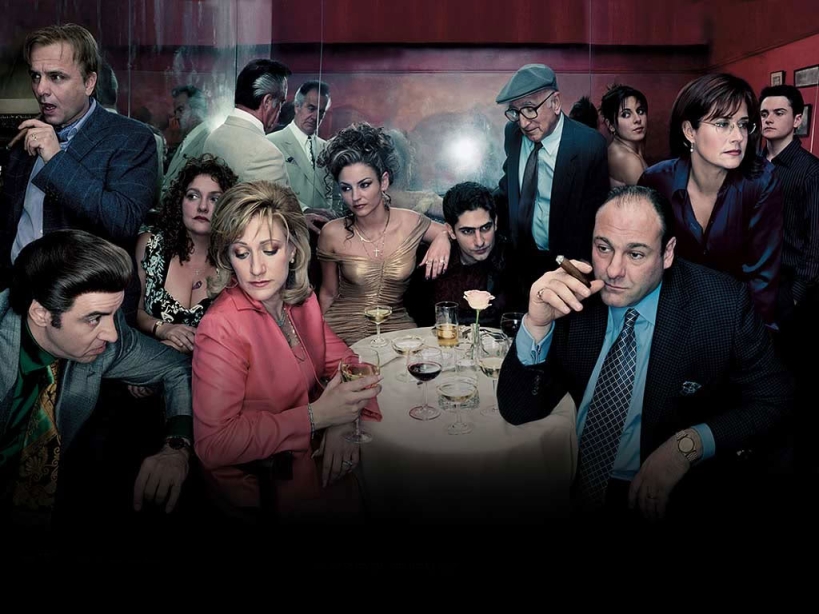
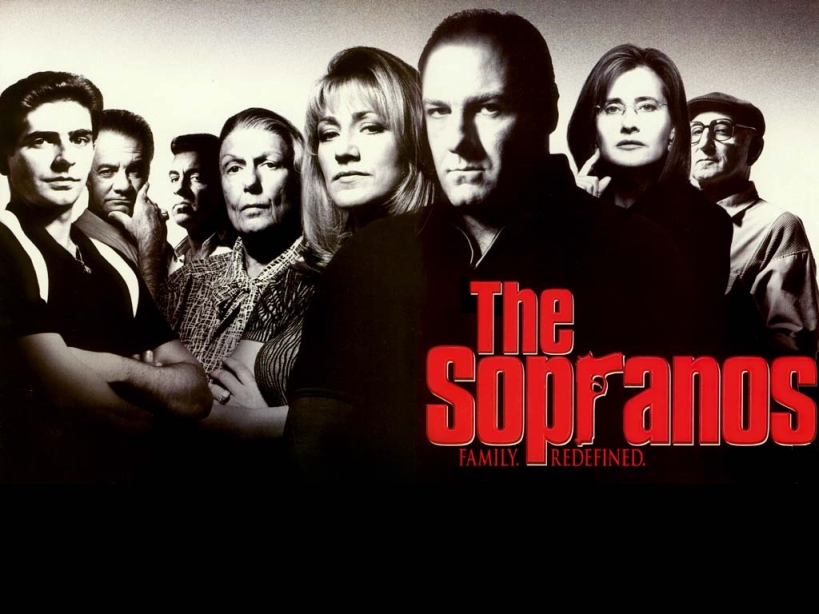
The Sopranos – more than a TV series!

The Sopranos are definitely an integral part of American pop culture since the series premiered in 1999. Through the characters of this series many things were explained to the people of America - Al Qaeda terrorist attack on America, presidential elections, the new bosses in the White House...


Several days after the terrorist attack on World Trade Center in 2001, New York Times wrote that nothing would ever be the same in America – not even Tony Soprano’s ride home to his house in North Caldwell, New Jersey. That is how they tried to describe the state of the American nation.

Al Qaeda's terrorist attack and its victims are described in hundreds of texts and hours of documentary television programs, but New York Times’ depiction of tragedy and post-terrorist paranoia through the opening title sequence of “The Sopranos” is probably the most picturesque.

Of course, they were referring to the particular frame from the opening sequence in which, in the side rear-view mirror of Tony Soprano’s car, twin towers of the World Trade Center are shown. Shortly after the attack, the creator of the series, David Chase, removed the sequence with "deceased" twins.

New York Times’ depiction of apocalyptic date was not the only case in which the series "The Sopranos" were used for picturesque display of American society’s pulse. There are hundreds of examples where these famous TV mobsters served as first aid in a quicker understanding of social conditions in United States. 

One of the most famous citations of Sopranos took place during the elections in United States, in 2004. In the last presidential debate between George Bush and John Kerry, the Democratic candidate compared George W. Bush with Tony Soprano: Being lectured by the president on fiscal responsibility is a little bit like Tony Soprano talking to me about law and order in this country.


In the mid nineties, creator of the series, David Chase, offered the pilot episode of "The Sopranos" to all prestigious American TV stations, including the famous company "Fox". They rejected the offered material because they were scared of its content - previously unseen combination of violence, explicit sex, and a completely new TV language spiced with curses, which the characters of the series often used. Fortunately, the most powerful U.S. cable network, HBO, recognized a golden goose in Chase’s mobster saga and from January 10, 1999, started broadcasting “The Sopranos”.

From the pilot episode and on, an army of sociologists, psychologists and various other theorists was provoked with the life of waste management king and mobster capo who, despite of dozens of treatments in Dr. Melfi’s psychiatric clinic and hundreds of grams of Prozac, is more and more struggling to balance his private and mob life.


From the very first episode of this gangster TV hit, there was literally not a single week without an analytical article by some well-known media, or news about “The Sopranos”, whether it was about the shocking registration of first mobster gay fellatio seen on some gangster movie or series, or an announcement that this series increased the number of Americans who visit  psychiatrists (under the influence of Tony Soprano’s sessions) and all the way to the disturbing news that the real crime family DeCavalcante (according to some, an inspiration for “The Sopranos”) recruited new members thanks to the popularity of the series.

From the beginning of the series, “The Sopranos” encountered resistance from the Italian community in America, which believed that the series harmed the image of Italians. On Columbus Day, Italian-American holyday, the community had strongly protested against the presence of actors of this series in their celebration. A popular former New York Mayor, Rudy Giuliani, a big fan of “The Sopranos”, had to personally intervene and protect the actors. One of the most famous members of the Italian community in America that has publicly criticized the depiction of Italians by “The Sopranos” was Victoria Gotti, daughter of the last great don from the Gambino crime family, John Gotti.

On the other hand, New York Times proclaimed “The Sopranos” as the most important piece of the American pop-culture in the second half of the 20th century. Also, on many lists of key events at the turn of the nineties, “The Sopranos” are highlighted. The most bizarre were the theories that connected the mythology of “The Sopranos” with Greek mythology, justifying this by the fact that the series integrated several archetypes: Zeus, Hera, and even Zeus’ seduction of mortal women.

Fiction and real life have constantly changed roles, like in the case of an actor in this series Lillo Brancato Junior, who was accused of robbery and armed assault on a police officer. But the key episode related to this series occurred on March 3, 1999, approximately two months after the series premiered. On that day, a black Pontiac was rolling the same rode Tony Soprano is taking in the opening sequence of the series, going from New York to New Jersey and approaching the headquarters of the DeCavalcante crime family. In the Pontiac were Mafia capo Anthony Rotondo, a "soldier" of DeCavalcante crime family, Joseph Sclafani, and two family members, which the FBI labeled as Ralph and Bill.

Sitting comfortably in the padded seats of the Pontiac, these travelers started a conversation about “The Sopranos” while enjoying their own dramatic alter egos. Their conversation completely depicted Quentin Tarantino’s image of mafia world, more accurately, something like the beginning of his movie Reservoir Dogs where an obscure group of gangsters is discussing about Madonna and her song "Like a Virgin".

The whole story of the clan DeCavalcante soon found herself on the table of FBI agents and it was recorded with a hidden microphone by Ralphie Guarino, who was later proclaimed as an "intruder" in the New Jersey mafia family. The recorded conversation of the DeCavalcante clan members regarding “The Sopranos” were used in the courtroom during the trial against the mafia family where capo Anthony Rotondo admitted that he was delighted with “The Sopranos”, especially because he identified himself with many details of the series.


Mobsters in college and the Lady Gaga’s first job

* In 2004, at the University of Toronto, Professor Maurice Yakovar began a series of lectures on "The Sopranos".

* In April 2005, the Supreme Court of Orange County, California sentenced twenty-two year old Jason Bautista on 25 years of imprisonment for first-degree murder. In 2003, Bautista killed his mother Jane with a knife because she reminded him of Tony Soprano’s mother Livia. At the court, Bautista said that he chopped the head and the hands of his mother because he learned how to hide the identity of a victim from one of the episodes of “The Sopranos”.

* In 2002, the British magazine Uncut proclaimed “The Sopranos” as best drama series in television history.

* In 2001, Lady Gaga appeared in the episode "The Telltale Moozadell". She was a teenager at the time.
read more...

Saturday, May 28, 2011

The elections – Andrew Jackson

The first attempt of former U.S. President Andrew Jackson (1767-1845), who is remembered by his nickname “Old Hickory”, to win the presidential function was during presidential election in 1824. 

Although he led in all opinion polls, at the end of the elections neither he nor the other three candidates received enough votes.

Since none of the candidates had enough votes, the House of Representatives decided the election, whose speaker Henry Clay was also a candidate for president. To make this decision, Clay withdraw his nomination (the number of votes he won placed him at forth place so he didn’t had any chance to win).

Excluded from the race, Clay used his influence to bring John Adams on the presidential position. In exchange, Adams appointed Clay as Secretary of State.

For Jackson, this was enough to accuse them of conspiracy against him. The next four years, the “Old Hickory” and his supporters led a campaign in which they accused the President of corruption and fraud.

This had an effect on the next election, in 1828, which are remembered for vicious tricks of both electoral teams.

During that campaign, Jackson was accused to be a multiple murderer, his wife Rachel of bigamy, and Adams of selling American virgins to the Russian emperor. 

In any way, Andrew Jackson won that elections, he rewarded his most loyal supporters with positions in the cabinet and unsuccessfully tried to change the electoral law because of which he lost the previous elections.
read more...

Saturday, May 07, 2011

He was no elephant – John Sedgwick

In 1864, during the American Civil War, General John Sedgwick (1812-1864) led the forces of the Union against the Confederate troops when the two armies clashed in Virginia.

Since Confederate forces started advancing, General Sedgwick realized that his soldiers needed encouragement. Therefore, he started shouting:

What? Men dodging this way for single bullets? What will you do when they open fire along the whole line? I am ashamed of you, dodging that way. They couldn't hit an elephant at this dist…

The General probably wanted to saydistance”, but he never finished his sentence.

He was fatally shot.
read more...

Thursday, April 28, 2011

Political Love – Harry Truman and Richard Nixon

During one official dinner at the White House, at the time when Harry Truman (1884-1972) was the President of the United States, it was decided that someone has to hold a toast. And not only that – the one that toasts, has to speak of love.

The young politician named Richard Nixon (1913-1994), who later became the President of United States, stood up.

At the cocktail before that dinner, Nixon desperately tried and failed to persuade Truman to have a drink with him. Therefore, the offended Nixon raised a glass and said:

"When Harry Truman will accept a drink from the hand of Richard Nixon without having someone else taste it first - that's love!"

Harry Truman settled the score later by saying:

Richard Nixon is a no good, lying bastard. He can lie out of both sides of his mouth at the same time, and if he ever caught himself telling the truth, he'd lie just to keep his hand in.
read more...

Wednesday, April 06, 2011

Coca-Cola's brief political history

This year marks 125 years since John Pemberton invented carbonated soft drink – Coca-Cola – “cure for nerve trouble, dyspepsia, mental and physical exhaustion, gastric irritability, wasting diseases, constipation, headache, neurasthenia and impotence”. But Coca-Cola was not only a cure, it was also the source of headache and hysteria in the political waters.

The only Coca-Cola that was colorless was created after World War II - for political reasons. It was produced in limited quantities, by special order, for a Russian Marshal Georgi Zhukov, who tried Coca-Cola during his negotiations about dividing Germany with the commander of allied forces in Europe, U.S. General Dwight Eisenhower. This Coca-Cola was packed in cylindrical bottles that had a red star as a label instead of Coca-Cola’s recognizable logo.

Zhukov really liked this drink, but since the relations between the U.S. and the Soviet Union began to tighten, it was inconvenient for him to be seen with an American drink in his hands. That is why, on Zhukov’s request, and with the approval of U.S. President Harry Truman, Coca-Cola Company manufactured colorless Coke and packed it so that it looked like vodka. 

Last year, Coca-Cola Company celebrated its 100 birthday, and this year they will celebrate 125 years since John Pemberton invented Coca-Cola. 

In the beginning, Coca-Cola was advertised as “Delicious. Refreshing. Exhilarating. Invigorating” drink and also as a cure for nerve trouble, dyspepsia, mental and physical exhaustion, gastric irritability, wasting diseases, constipation, headache, neurasthenia and impotence. By often following U.S. foreign policy, rarely acting in conflict with American interests, and eventually becoming the symbol of globalization, in the past decades Coca-Cola was also and a source of headaches and hysteria in the (international) political waters.

During World War II, a special group of Coca-Cola employees called “Technical Observers” was among U.S. army soldiers. These Technical Observers supervised the shipment and operation of 64 complete bottling plants that distributed nearly 10 billion bottles of Coca-Cola to servicemen and women.

Military personnel who worked in Coca-Cola military plants became just as important as mechanics who worked on the maintenance of aircraft and tanks. And thanks to its popularity, along with lobbying in the army with the statement that this drink was a key product in the war, in 1942 Coca-Cola Company managed to get an exemption from sugar rationing.

A company that at all times sought to show how much symbolic power its drinks has on U.S. troops, also functioned and on the opposing side, in Germany, where before the war this drink was very popular. One of the Nazi statements was that “America never contributed anything to world civilization but chewing gum and Coca-Cola”.

Some publicists have stated that Coca-Cola Company had controversial relations with Germany, before and during World War II: during the war, Coca-Cola branches didn’t stopped working in Germany, but they weren’t able to import the necessary raw materials in the country. Publicist Mark Pendergrast wrote that several top executives from Coca-Cola branch in Germany were in fact members of the Nazi Party, and there are also records that this company sold millions of bottles to Hitler's Germany.

This obscure and not completely explored part of Coca-Cola history was not an obstacle for this product name to become linked not only to America but to key values of Western countries, such as "every kind of freedom, democracy and free market capitalist”, during the Cold War period. Parallel to that, Coca-Cola was expanding in the world, and the American political influence was strengthening. 

In the early fifties, those who were opposed to American influence marked Coca-Cola as an American cultural weapon.  In relation to this, in France was created a term “coca-colonization” - It was used by leftists who fought against opening of factories for bottling Coca-Cola drink. They even tried to prove that Coca-Cola is poisonous. The former president of the Coca-Cola Company, Robert Woodruff, stated that leftist’s hostility towards Coca-Cola comes from the fact that Coca-Cola is the very “essence of capitalism”.

Despite the logic of capitalism, and in the name of protecting the interests of U.S. foreign policy, until the nineties Coca-Cola was practically not present in the Eastern European market. The first opportunity for Coca Cola to install facilities in Russia, in mid-sixties, was not used because the only possible partner was a communist government (there were no private firms in Russia during that regime). For Coca-Cola, that probably wasn’t a problem, but it was for the U.S. government. In that period, U.S. Army was in war with Vietnam, and if Coca-Cola started working in Russia, they would have financed the communist side, American public enemy number one. 

To this day, connection between Coca-Cola and American values brings damage to the Coca-Cola Company in the Middle East.  There, in mid-sixties, Coca-Cola was accused of anti-Semitism and in the following decades it has become a symbol of "American occupying" and "anti-Muslim” policy. Some internet sites claim that Coca Cola, read from right to left, in Arabic language means "No Muhammad, no Mecca". Boycott of Coca-Cola is also elaborated with claims that by buying a bottle of Coca-Cola tenth of its price goes to the largest Arabian enemy, Israel.

In 1966, Coca Cola was accused of avoiding working in Israel, in order to protect sales of its products in the Arabian world. Things started to get complicated when, because of these accusations, Jewish organizations in America begun to boycott Coca-Cola. The company eventually allowed the construction of a bottling plant in Israel, in 1968, but that again caused boycott similar to that of Arabian League, which ended in the early eighties.

With that, Coca Cola found itself again on the course of U.S. foreign policy.  Respond to this was creation of authentic Arabian Colas such as Mecca Cola. Recently, the Iranian Minister of Industries, Ali Akbar Mehrabian, renewed the idea of boycotting Coca-Cola, because it is a "Zionist product.

read more...

Monday, April 04, 2011

Bum that became a star – Ted Williams

You Tube and vocal potential of Ted Williams, beggar and petty thief from Ohio, not only made him famous throughout the United States, they also opened him the door to become a millionaire.

Miracles do happen and proof of this is the fate of homeless man, Ted Williams (54). Until recently, this man ate and slept on cardboard, and now, thanks to You Tube and his golden voice, he has become famous. This not only gave him a chance to start his life all over again, he now has the chance to become even a millionaire.

Until recently, Williams has lived in extreme poverty. For the last two years, he lived on the streets of Columbus, Ohio, and to feed himself he was forced to beg, and sometimes, even to steal. Luck smiled on him when a local reporter noticed him. This reporter made a video of Williams and posted it on the internet.  On that video, which lasts only 90 seconds, Ted is shown begging on one crossroad, while holding a sign: “I have a God given gift of voice. I am an ex-radio announcer who has fallen on hard times. Please! Any help will be greatfully appreciated. Thank you and God bless you / Happy Holidays”.

The life of Ted Williams, former alcoholic and drug addict, has changed fundamentally after the television crew recorded his capital quality – golden radio voice.

Only 24 hours later, producers and advertising agencies across America began to compete by offering him a job. Job was offered by MTV, NFL, ESPN… Even Cleveland Cavaliers wanted to hire Williams, as an announcer during their basketball games. Some experts believe that Williams, with his voice, could earn millions of dollars.


It’s like almost winning the mega ball lottery, this is just phenomenal” – Williams said after gaining great fame almost over night.

In America, Williams is now known as “Radio Man”. Nearly three decades ago, he actually worked on a radio station – in the eighties, he first worked as a DJ, and later became host of the morning program on which he announced himself as Teddy. However, a promising career was interrupted with alcohol and drugs.

New American star told the reporters that his downfall began in 1993 when, along with whiskey and beer, he started using marijuana and cocaine. Williams was left without a home when he became addicted to crack, and the police arrested him, not only for drug possession, but also for robbery in which he participated. Even then, he was lucky: he spent in prison only a few months. He hopes now that he will not take for granted the second chance he was given, and that in 5 years he will have his own radio station.

I've got two years clean, and I'm trying hard to get it back. And hopefully somebody from one of these television or radio stations will say, 'Hey, I need a voice-over.” – said Williams in the viral video on You Tube.


He hadn’t seen his mother for ten years

Williams has behind him a marriage in which he got seven children, five daughters and two sons. He says that he now regrets the fact the didn’t dedicated more time to his children. After he became a star, one television organized a meeting between him and his mother Julia (92), which he hasn’t seen for ten years. The meeting was very emotional: Ted fell on his mother knees as she covered her face with her hands, trying to hide tears.
read more...

Sunday, March 27, 2011

KKK – From murderers to folklore society

Racist movement that has done most terrible crimes in the United States, in the twenties and sixties of the 20th century, still exists. But Ku Klux Klan never recovered after a group of enthusiasts from the FBI broke their backbone in Mississippi.

Although Ku Klux Klan was founded in 1865 (in the defeated South after the Civil War, as a direct consequence of the abolition of slavery), this movement was relatively quiet until the turbulent twenties of the last century. Then, some of their worst crimes they committed in the sixties. In spite of having its supporters in all forms of government (even in the Oval Office), the backbone of the Klan was broken in the late sixties in Mississippi after which KKK never recovered, although they still exist today.

The first reports of BOI (Bureau of Investigation) agents, a small unit whose work depended mostly on the enthusiasm and good will of several dozen young men who wore hats and were clumsy on the trigger, said that radical members of KKK were organizing and meeting secretly. They also noticed that KKK members were following a series of hidden symbols and protocols, and that they are prone to violence and lynching. Their goal was clear: racism, segregation and destruction of the black race. Ties with the police, judiciary, and rich industrialists from the South were confirmed, but not proven.


Crimes committed during the twenties were horrible: hanging of innocent people, stamping, cutting of limbs and the expulsion of all those who oppose KKK. All of this was enhanced with intimidation tactic, which became a symbol of the Klan - burning of crosses and white hoods.

- A journalist from New Orleans brought me a letter from the Governor of Louisiana, John. M. Parker. The Governor has been unable to use either the mails, telegraph, or telephone because of interference by the Klan. The governor is seeking assistance because local authorities are absolutely inactive. He fears that judges, prosecutors and police officers, all of them, are corrupted - J. Edgar Hoover informed the Bureau and initiated the first federal investigation of the Klan. In the letter Hoover received it was stated that the Klan has completely taken over the entire northern half of the country and are killing all those who oppose them.

In the sixties, KKK was responsible for the death of many people. Their motive was the so-called Freedom Summer, a movement that aimed to register all dark-skinned citizens of Southern states in the electoral roll, and to give them a right to vote.  With that, a campaign of terror began. One of the persons that were thorn in the eye of KKK was New Yorker Michael Schwerner (1939-1964). Schwerner organized boycotts of all shops that did not allow African-Americans to enter. Three months later his body was found buried behind a local farm. 21 suspects were arrested, including Sheriff Cecil Price, his deputy and Baptist minister Edgar Ray Killen. After three years of trials, seven of those suspects were convicted, but none of them for the murder of Schwerner.

The anger of the nation resulted in Civil Rights Act of 1964, which abolished segregation.

The hunt for the white hoods started in 1966, after an attack on Vernon Dahmer, famous human rights activist. He died of severe burns a day after his house was firebombed by the supporters of KKK. More than 120 witnesses, informers and moles assisted the FBI investigation. Imperial Wizard of the White Knights of the Ku Klux Klan in Mississippi, Samuel Bowers, who ordered the attack on Dahmer, surrendered himself. He was soon sentenced to seven years in prison and the Klan began to lose its breath.

Bowers and Killen, leaders and one of the main ideologists of KKK movement, were persecuted and often ended up in detention. The Klan never again resurrected, at least not in the form he had in the twenties and sixties.

The FBI estimates that there are currently several hundred small and uninteresting branches of KKK in the U.S.. It is estimated that they have about 8,000 members in 179 communities. They are mostly posing for tabloids and organizing marches with skinheads.


FBI agents were constantly in fear of revenge

James Ingram (1932-2009), former FBI agent, who, in the period of 1975-1983, worked on the most serious cases of racial murders in Mississippi during sixties, said that agents were constantly in fear of revenge of the Klan. 

Agents would always watch. They’d look underneath their cars to make sure we did not have any dynamite strapped underneath … Then you’d open your hood and make sure that everything was clear there. We had snakes placed in mailboxes. We had threats. We infiltrated the Klan in many ways. We had female informants. … And we had police officers that were informants for us.”
read more...

Sunday, January 02, 2011

Bad Luck – Mark Twain

During his fruitful life, the famous American writer Mark Twain (1835-1910) held numerous lectures in many cities of the United States. On one occasion, he was supposed to hold a lecture in certain small town that he hadn’t visited before.

Before the lecture, he went to the barbershop.  He told the owner that he wanted to be shaved and after that, he mentioned that it was his first visit to this town.

"In due time you visited our town", the barber politely said to him.

"Why is that?" Mark Twain asked.

"The famous writer Mark Twain will give a lecture this evening. You will not miss that, right?", the barber replied.

"Well, I hope that I will not ..."

"Have you bought a ticket? It will be a big crowd."

"No, I haven’t yet ..."

"Unfortunately, they are all sold out. You will have to stand."

"I have bad luck,” sighed Mark Twain. "Whenever he is holding a lecture, I have to stand.”
read more...

Monday, December 13, 2010

I became the spendthrift of my own genius – Oscar Wilde

In 1882, when he traveled to the United States due to a lecture that he was supposed to hold, U.S. customs officials stopped writer Oscar Wilde (1854-1900).

- Sir, you have something to report? – he was asked.

- I have nothingWilde said - except my genius!

Years later, poor and abandoned, finding himself in prison, Oscar Wilde was thinking about his dissolute life and behavior.

I became the spendthrift of my own genius”, he wrote. “I forgot that every little action of the common day makes or unmakes character...
read more...

Tuesday, December 07, 2010

You Never Know What You'll Need – Vyacheslav Mikhailovich Molotov

During World War II,  the United States, that is, the White House was visited by the former Soviet Foreign Minister (Foreign Commissar) Vyacheslav Mikhailovich Molotov (1890-1986).

His visit was a top secret, and only a small number of people at the presidential palace know who is actually hiding behind the name of "Mr. Brown".  

However, the content of Molotov’s suitcase raised suspicion among servants in the White House.

When they were tasked to unpack "Mr. Brown’s” suitcase, the servants were astonished with what an unknown man had brought with him to the White House.

Instead of underwear, shirts and formal suits, Molotov packed a gun, a long sausage and a loaf of brown bread.
read more...

Wednesday, October 27, 2010

Better Side of Nicotine!

Each pack of cigarettes has a warning about the brutal truth of harmful effects of tobacco, but it does not inform that smoking bans around the world are creating a new trend – the number of marriages, friendships and close relationships is increasing between the people that are pounded in the rooms for smokers.

Each pack of cigarettes tells us that smoking causes cancer of all possible internal organs, that it has negative consequences for pregnancy...  But, the pack does not say that smoking, in a way, modeled today’s culture of entire civilization and that in recent decades it shaped the lifestyle of modern men and women.

Anti-smoking mania that is currently affecting the western world came to the extent in which the cigarettes are thrown out of the cultural and social life.

Besides prohibiting the advertisement of cigarettes, their display in films and on television also is avoided, and recently, a great "rewriting of history" is in fashion.

In the United States, they erased a cigarette from the hand of the famous Beatle, Paul McCartney, on the cover of re-released album "Abbey Road", and the French have removed cigarettes from the paintings of Jean Paul Sartre and Albert Camus, that adorned their ceremonial post stamps. If smokers, hundreds of years ago, were so "notorious", the question is, how would the present-day popular culture look like, and who would, for example, instead of Humphrey Bogart, stand for a cultural icon of the 20th century. For, although Bogart died back in 1957, every kid now knows that he was a great charmer, who never took a cigar out of his mouth. He based his image on a specific method of smoking, holding a cigar in his mouth between two smokes. Such smoking even entered in the Oxford Dictionary, as a verb “bogarting”.


If the new technologies initiate remastering of the old movies, like the French did with their stamps, it would be likely that "Casablanca", from a cult film, will become a comedy, in which the main actor is doing something strange with his hands. Richard Klein, a professor of French literature and the author of “Cigarettes are Sublime”, a kind of history of smoking, said that “Casablanca" is a type of a film in which cigarettes are providing specific light and character. Klein noted another significant "contribution" of Bogart’s cigarettes; if there was not so much smoking in Casablanca, Franklin Roosevelt would not be so thrilled with the film in 1942, and he would not set up a meeting with Churchill and De Gaulle in Casablanca at the beginning of 1943, where there was made a significant improvement in the U.S. and France relations. America, then, ceased to maintain relations with the Government in Vichy and De Gaulle’s move was acknowledged,  and who knows how the course of World War II would have been if Roosevelt and De Gaulle had not met in Casablanca.  Klein also noted that Hitler was sworn anti-smoker, and that, because of this, smoking at that time was accepted as a kind of patriotic duty.

When it comes to popular culture, one should ask what would happen to the famous scene from the movie "Basic Instinct" in which Sharon Stone crossed legs and, close-up, showed her crotch and became a symbol of sexuality for teenagers. To reiterate, this is performed at a hearing where she was a suspect for murder, during which she lit a cigarette, although they cautioned her that it is prohibited. And, in the fatal moment, she uttered a "cult" line: "What are you going to do, arrest me for smoking?"

Smoking, however, is not only an integral part of the cultural heritage of human civilization. Cigarettes did for a long time kill our internal organs, but with an extremely proactive marketing of tobacco companies, cigarettes became a significant social factor. Hypothetically speaking, if no one smoked, the men around the globe would not have a significant advantage in winning the women. For years the older seducers teach kids that you should always have a lighter with you even if you do not smoke, because you never know when a girl needs a fire. For a long time, the first lit cigarette usually went after the first intercourse, and for boys it was the entrance into the world of men.

Cigarettes, on the other hand, had a significant impact in the "conquest of freedom" of weaker gender in their fight for gender equality, and, eventually, they became a symbol of female emancipation and independence. Puritans in America, in the first period after the Second World War thought that there is a subconscious link between the consumption of cigarettes and sexuality, emphasizing "the rigidity of the situation in which a woman puts something between the lips."

So, during the seventies, picture of a woman with a cigarette represented a symbol of independence and freedom from the conservative morality, and that was embodied in an advertising campaign for cigarettes, "Virginia Slims" with the slogan "You've come a long way, baby." This send a message: a woman that smokes a cigarette is a free woman, she enjoys it independently from the man who wants to approach her with a lighter.

In Europe, tobacco control is gaining momentum in the last decade, while in America this struggle is far more present in people's lives, which is why America has become known as a country where smoking is forbidden even in your own apartments because the neighbors may sue you because you are poisoning them through the ventilation system.

Since 1965, the percentage of smokers in America dropped from 45 to about 20 percent of the total population. Hannah Arendt, German political theorist of Jewish origin, had once written that the smokers in line reminiscent her of an unpleasant scenes from her youth, when Jews were still entering the cattle wagons on their way to the gas chambers. That feeling smokers may experience at any airport in Europe, where visitors are forced to seek special rooms for smoking, and where they are pushed as in a nature reserve.  In these “smoking reserves” , however, it is easy to see that relations among people are somewhat closer, because, as non-smokers mind their own business around the airport, smokers chat in a small space.

 A
In America there is a phenomenon of "smoker's lobby" in large corporations, where the closest relations are made  in the very smoking rooms. This is, maybe, best shown in the most popular sitcom in the last decade, "Friends", when one of the main characters deliberately starts to smoke because she saw that those colleagues of hers who go on smoke-break are getting along better with the head of the company.

Therefore, among smokers who are becoming a new legal category, a new kind of solidarity and opportunity for bonding is created. It is interesting that Ireland was the first country in Europe to introduce a general smoking ban, and that included smoking in pubs, which was seen as a major blow to their local culture. The first effect was a decline in visits to pubs, but in the long term, sociologists have noted another effect - increase in the number of marriages. This was explained with increased interaction between the smokers who were, after the ban, forced to attend small spaces for smokers. In simple words, the average guy in smoking zone has better chances with a girl.

United Kingdom also adopted a total ban on smoking in 2007, which led to the closure of many pubs, particularly low-profit local "holes" for fun for the people in the neighborhood, who felt that it was not right to drink beer without a cigarette.  The respected British weekly newspaper The Economist noted that in the first two years of ban existence, about 27 pubs per week was closed on the island. Some pubs have managed to adopt by attract wine lovers, and almost all pubs have started to serve food (which until recently was unthinkable).

With a change of pub character, "lifestyle" of an average Briton was also changed.  Until the smoking ban, 75 percent of Britons has visited pubs, of which two thirds were considered as regular guests. This is how the journalist of The Economist described a new situation:  “The tables are sticky with half-dried beer. There is a wide range of beers to choose from, but often it tastes as if the pipes have not been cleaned for weeks. Until smoking was banned from pubs in 2007, the front half of pubs stank of cigarettes while the back half was suffused with a smell from the toilets. Sadly, today, the tables are as sticky as ever and, while the cigarette smoke has gone, that has only allowed the toilets' odour to pervade the entire place.”

The only argument which "fighters for the rights of smokers" can not deny are many medical reports that prove that smoking is not only harming health of those who smoke, but people around them to. This is why these bans are slowly conquering the world. Greece is one of the last European countries that was scheduled to introduce a ban in restaurants from September 1 this year, but that was unrealistic in a country that still has 40 percent of smokers. Association of restaurateurs responded with initiative “ashtrays on the tables again”, and the Greeks continued to smoke like chimneys. Most bizarre ban on smoking in Europe is certainly the one in Amsterdam. In front of a certain coffee shop, housed in the middle of Red Light District, opposite to the local church, stands a large sign: "If you smoke marijuana, which is mixed with tobacco, then smoking is permitted only outside. If you smoke marijuana without tobacco, then smoking is allowed inside."


The first ban

The first known smoking ban was introduced in Mexico, in 1575, and involved the use of tobacco in the churches, in all the Spanish colonies in the Caribbean. Then the Turkish Sultan Murad fourth banned smoking in the Ottoman Empire, and Pope Urban Seventh threatened to "excommunicate anyone who is caught taking tobacco in the church, whether he is smoking, chewing or inhaling it through the nose."

The first "secular" building where smoking was prohibited is the old government building in Wellington, New Zealand, where smoking was prohibited in 1876. The reasons for this prohibition, however, were not medical but in fear of fire, since this building is still the second largest wooden building in the world.
read more...
Related Posts with Thumbnails